
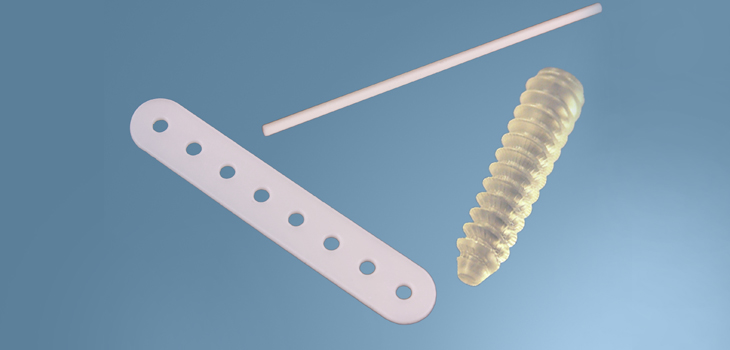
Proxy Biomedical Ltd. has just launched Proxy Bio-XT, an innovative, strength reinforcing technology that provides a valuable solution to developers of next generation resorbable orthopedic products. According to the March 10, 2015 news release, “The proprietary processing technology optimizes the microstructure of biomaterials to enable greater than 100% strength gain in resorbable implantables using the same resorbable material grades as those used in current products.” The company says that resorbable implants made with Bio-XT were significantly stronger than predicate devices of identical geometry and material grade, with a torsional strength increase of 102%.
Proxy Biomedical Launches Proxy Bio-XT
1 min read Premium comments
Secondary
The company indicates that Bio-XT can facilitate disruptive innovations in implant design, including the “Introduction of stronger resorbable products for new indications, for which only non-resorbable products are currently considered suitable; the introduction of highly porous products, facilitating osteo-conductivity for higher quality tissue regeneration, without compromising product strength; and the introduction of lower profile products compared to currently available resorbable products, using less material, without compromising product strength.”
“Resorbable implants present a number of clinical benefits for orthopaedic applications but their relatively low inherent strength presents a barrier to new product design and limits the adoption of resorbables in new indications, ” said Kieran Moloney, vice president of engineering, Proxy Biomedical, in the news release. “Proxy Bio-XT presents an excellent opportunity to substantially improve the performance of the resorbable implants that are currently on the market.”
Moloney told OTW, “The Bio-XT development process challenged us to ensure that we were able to accommodate any resorbable material and osteoconductive compounds. We successfully optimized Bio-XT to accommodate all polymer and composite materials, meaning we can now facilitate improvements to most implants on the market. Additionally, we refined the process parameters to deliver performance improvements in a cost-effective way. I’m delighted that we are now delivering performance improvements at a price point that competes very effectively with injection moulding.”
React:
Discussion
This is a fascinating development. In my practice we've seen similar outcomes with the revised protocol. The key differentiator seems to be patient selection criteria. Has anyone else noticed the correlation with BMI thresholds?
Great point. I'd push back slightly on the conclusion, the sample size in the cited study is too small to draw population-level inferences. That said, the directional signal is compelling and worth a larger RCT.
We implemented a similar approach last year. Early results are promising but we're still gathering 12-month follow-up data. Happy to share our protocol if anyone is interested.
Join the conversation
Orthopedic professionals are discussing this. Sign in and upgrade to read every comment and add your voice.