
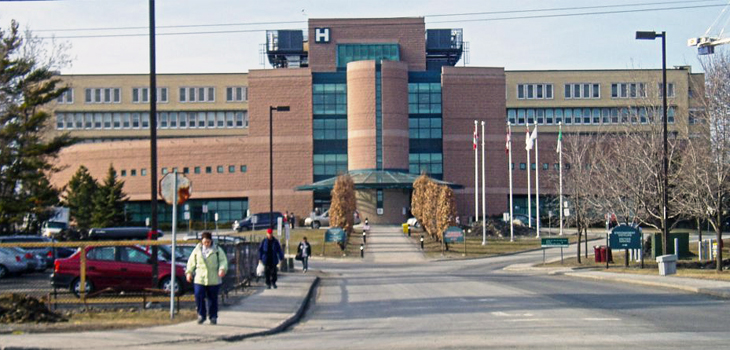
Ottawan patients rejoice. Wait times for a joint replacement in Ottawa have dropped dramatically in the past six months. Instead of waiting 460 days for a hip replacement at the Ottawa Hospital—as was the case in July—patients got new hips, beginning in January 2015, after a wait of only 74 days. Half of all hip replacements at the Ottawa Hospital are now being done in 70 days or less, according to Dan Butler, writing in the Ottawa Times.
Ottawa Cuts Joint Replacement Wait Times
1 min read Premium comments
Secondary
The improvements have been almost as dramatic for patients waiting for new knees, he wrote. The wait, which was as long as 434 days in July, has dropped to 219 days. Now, the Ottawa Hospital is completing 90% of its knee replacement operations within 219 days, a figure that is just four more than the provincial average.
Paul Beaulé, M.D., the hospital’s head of orthopedic surgery, told Butler that changes in the way the flow of surgical patients is managed deserves credit for much of the wait time improvement.
In the past, family doctors would refer patients with knee or hip problems to surgical specialists, who would eventually see them and book times for their operations. “That obviously does not permit a lot of co-operation between surgeons and operative sites, ” Beaulé said.
Now, a central clinic assesses surgical patients and assigns a date for surgery before they visit their surgeon, ’ he said. “That really ensured that all the resources of the day of surgery were used and patients were appropriately triaged, minimizing cancellations and medical work-ups.”
Beaulé said that with the provincial Ministry of Health switching to a system that provides extra funding to hospitals whose procedures rank high on quality measures, “it is more important than ever not to be a laggard.”
Author
React:
Discussion
This is a fascinating development. In my practice we've seen similar outcomes with the revised protocol. The key differentiator seems to be patient selection criteria. Has anyone else noticed the correlation with BMI thresholds?
Great point. I'd push back slightly on the conclusion, the sample size in the cited study is too small to draw population-level inferences. That said, the directional signal is compelling and worth a larger RCT.
We implemented a similar approach last year. Early results are promising but we're still gathering 12-month follow-up data. Happy to share our protocol if anyone is interested.
Join the conversation
Orthopedic professionals are discussing this. Sign in and upgrade to read every comment and add your voice.