
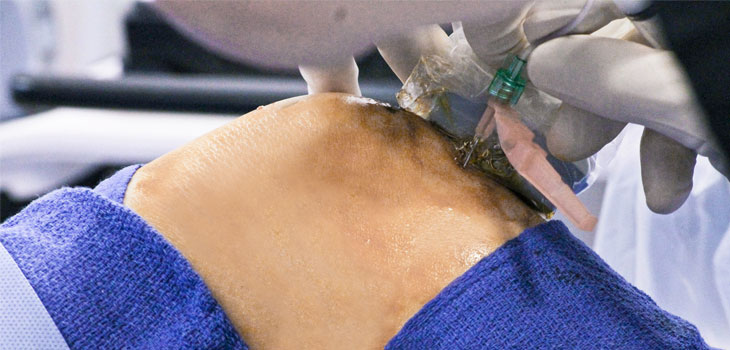
San Diego-based Cytori Therapeutics, Inc. has treated its first patient in its FDA approved trial assessing the effect of Cytori Cell Therapy for osteoarthritis of the knee. Peter Hanson, M.D., medical director of Orthopedic Surgery at Sharp Grossmont Hospital, took care of the patient.
Knee OA Trial Enrolls First Subject
2 min read Premium comments
Secondary
The trial, called ACT-OA, is a Phase II FDA randomized, double-blind placebo controlled trial involving 90 patients. They will be evaluated on the efficacy and safety of Cytori’s autologous adipose derived therapy called ECCO-50. The trial will test both a low dose and a high dose vs. placebo and will be conducted over 48 weeks. The randomization will be 1:1:1 between the control, low dose and high dose groups.
The primary end point will be the subjects’ pain on walking as measured by the Knee Injury and Osteoarthritis Outcome Score at 12 weeks. Secondary endpoints assessed will include pain, joint function, magnetic resonance imaging and adverse events.
Osteoarthritis is a disease of the entire joint involving the cartilage, joint lining, ligaments, and underlying bone. The breakdown of tissue leads to pain, joint stiffness and reduced function. Osteoarthritis is the most common form of arthritis and affects an estimated 26.9 million U.S. adults.
“Joint disease from osteoarthritis is pervasive, debilitating and significantly impacts quality of life, ” said Hanson. “The ACT-OA trial of Cytori’s new cellular therapeutic, if successful, will fill an important gap in our clinical armamentarium between anti-inflammatory medications and joint replacement. As a surgeon who specializes in total joint replacements of the hips and knees, I have been searching for a biologic solution in order to treat my patients with something other than major surgery.”
Current treatments include physical therapy, non-steroidal anti-inflammatory medications, viscosupplement injections, and total knee replacement. The American Academy of Orthopaedic Surgeon’s (AAOS) guidelines for the treatment of osteoarthritis of the knee note that there were few non-surgical treatments that could be recommended. Officials of Cytori Cell Therapy see this AAOS position as highlighting the potential for their product to address what they perceive to be an inadequately addressed medical need.
“We are enthusiastic about this new therapeutic in light of a substantial amount of preclinical, veterinary and clinical feasibility work that has been conducted thus far, ” said Brian Cole, M.D., a principal investigator of the ACT-OA trial, and professor, Department of Orthopedics, Department of Anatomy and Cell Biology, section head, Cartilage Restoration Center at Rush, Rush University Medical Center. “The clinical trial is well designed and I believe it has a good chance of enrolling relatively quickly given the common nature of the disease.”
Author
React:
Discussion
This is a fascinating development. In my practice we've seen similar outcomes with the revised protocol. The key differentiator seems to be patient selection criteria. Has anyone else noticed the correlation with BMI thresholds?
Great point. I'd push back slightly on the conclusion, the sample size in the cited study is too small to draw population-level inferences. That said, the directional signal is compelling and worth a larger RCT.
We implemented a similar approach last year. Early results are promising but we're still gathering 12-month follow-up data. Happy to share our protocol if anyone is interested.
Join the conversation
Orthopedic professionals are discussing this. Sign in and upgrade to read every comment and add your voice.