
A 60-year-old woman with a 90% bone deformity in her knees was “cured” in a remarkable surgery in Gurgason, India. Rajesh Devi suffered from osteoarthritis and severe osteoporosis and the bones of her knee had become permanently deformed and were literally bent over by a full 90 degrees.
India Doc Corrects 90° Deformity
1 min read Premium comments
Secondary
She was bedridden. Her legs could not bear her weight. To get around, she had to crawl on her arms on the floor. After examining Devi’s bone condition, Vivek Logani, M.D., chief of the Joint Replacement Surgery at Paras Hospital, said that she had tight contracture of the muscles and soft tissues on the back of the knee, leaving the joint completely deformed.
A flexion deformity is an inability to straighten the knee. Knee replacement in cases of flexion deformity of 100 to 110 degrees, is a highly difficult procedure, Logani said, but he decided to give it a try.
The procedure lasted five hours. The surgeons performed soft tissue releases and ligament balancing on both the knees to correct the deformity. The procedure was successful with 80-90% of the deformity corrected during the operation. Further correction may be possible, said Dr. Logani, during post-operative rehabilitation.
“The patient started walking on the second post-operative day, ” said Logani.
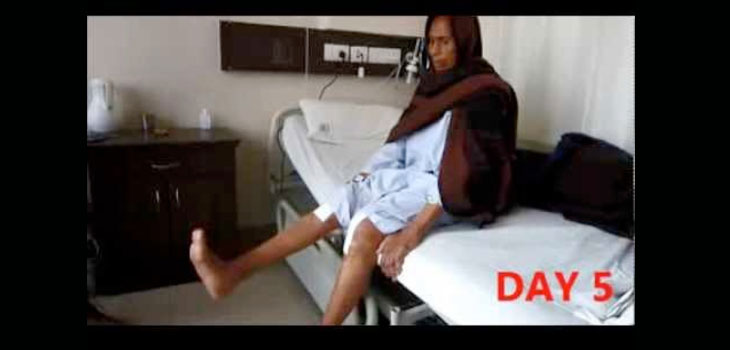
“Her muscle strengthening is progressing and on the fifth post-operative day following surgery, she was walking comfortably. Both her knees were straight, free of pain and deformity, and were bearing the full weight of her body, ” he added.
Author
React:
Discussion
This is a fascinating development. In my practice we've seen similar outcomes with the revised protocol. The key differentiator seems to be patient selection criteria. Has anyone else noticed the correlation with BMI thresholds?
Great point. I'd push back slightly on the conclusion, the sample size in the cited study is too small to draw population-level inferences. That said, the directional signal is compelling and worth a larger RCT.
We implemented a similar approach last year. Early results are promising but we're still gathering 12-month follow-up data. Happy to share our protocol if anyone is interested.
Join the conversation
Orthopedic professionals are discussing this. Sign in and upgrade to read every comment and add your voice.