
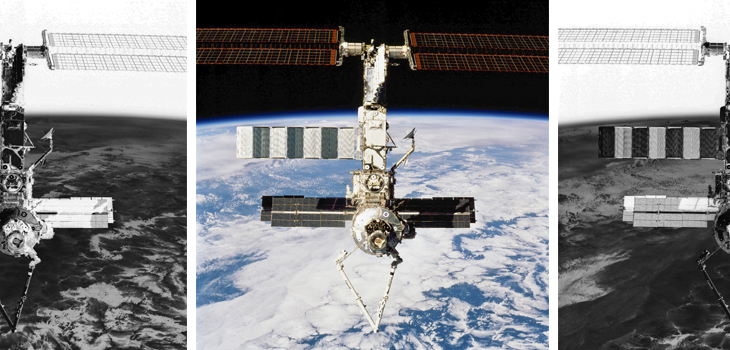
Send 40 rodents into space and what do you get? Hopefully, new information that will help scientists grow bone on demand. A new study that investigates NELL-1, a bone-growing protein, has just been funded. The location? The International Space Station.
Bone-Growing Protein Going to International Space Station
2 min read Premium comments
Secondary
“This research has translational application for astronauts in spaceflight and for patients on Earth who have osteoporosis or other bone-loss problems from disease, illness or trauma, ” said Chia Soo, M.D., University of California, Los Angeles professor of plastic and reconstructive surgery and orthopedic surgery and member of the Eli and Edythe Broad Center of Regenerative Medicine and Stem Cell Research, in the February 23, 2015 news release. Dr. Soo is also research director for UCLA Operation Mend, an organization devoted to providing medical care for wounded warriors.
As indicated in the news release, ground tests for an investigation known as Systemic Therapy of NELL-1 for Spaceflight-Induced Osteoporosis will begin this year. The NELL-1 protein, naturally occurring in humans, has the capability of forming bone at one site when implanted locally or at several sites when delivered through the bloodstream. For local bone formation doctors would directly implant NELL-1-infused osteoconductive scaffolds. NELL-1 is bioengineered to remain active in the bloodstream until it reaches the bone.
“The space station offers wonderful opportunities for translational medicine. When something is looking great in the lab, we can learn a little bit more about it in space. That then can help towards new treatments for disease, ” said Julie Robinson, Ph.D., NASA’s Chief Scientist for the International Space Station program at Johnson Space Center in Houston.
The team’s goal is to identify how the protein works in response to osteoporosis and bone health compromised by disuse, which is what astronauts experience living in space.
“Many of our injured military personnel suffer horrific injuries that exceed our present surgical reconstructive capabilities, ” said Dr. Soo. “If successful, NELL-1 therapy can help to restore massive bone loss defects as well as help prevent continued bone loss in bed bound wounded warriors.”
Dr. Soo told OTW, “NELL-1 is a platform technology developed with over 17 years research at UCLA that can be used to grow bone when implanted locally or when injected systemically. Locally implanted NELL-1 is being developed as a bone graft substitute for the likely indication of spine fusion. Systemic NELL-1 is being developed as a therapy for osteoporosis with key tests to be performed on the International Space Station. Unlike BMP2 (INFUSE), preclinical studies show that NELL-1 does not elicit an inflammatory response, induce osteoclastic (bone resorbing) activity, or produce ectopic bone in undesired locations.”
Asked what must happen before this assistance is available to human patients, Dr. Soo stated, “We are currently working on the necessary preclinical safety studies and GMP (good manufacturing practices) of NELL-1. Once these are complete, we will submit an application to the FDA for permission to start first-in-man studies.”
Dr. Soo dislcosed, “We are inventors of NELL-1 related patents and are founders and/or board members of a company which sublicenses NELL-1 patents from the UC Regents, which also hold equity in the company.”
React:
Discussion
This is a fascinating development. In my practice we've seen similar outcomes with the revised protocol. The key differentiator seems to be patient selection criteria. Has anyone else noticed the correlation with BMI thresholds?
Great point. I'd push back slightly on the conclusion, the sample size in the cited study is too small to draw population-level inferences. That said, the directional signal is compelling and worth a larger RCT.
We implemented a similar approach last year. Early results are promising but we're still gathering 12-month follow-up data. Happy to share our protocol if anyone is interested.
Join the conversation
Orthopedic professionals are discussing this. Sign in and upgrade to read every comment and add your voice.