
Ranfac Corp. recently launched a proprietary Marrow Cellution Bone Marrow Aspiration system, which the company claims allows a clinician to precisely reposition the aspiration system to a new location in the marrow after each 1mL, with a single entry point.
“Better” Bone Marrow Aspiration System Launched
1 min read Premium comments
Secondary
The company says the device has, “shown an ability to increase concentrations of stem cell and progenitor cells in marrow aspiration when compared to traditional needles.” The device overcomes the limitations of traditional needles that limit the amount of peripheral blood that otherwise would have been aspirated, by forcing the flow of aspiration through lateral side ports rather than from an open-ended cannula.
According to a February 2015 announcement, the system incorporates technology to “precisely reposition the retrieval system to a new location in the marrow after each 1mL of aspiration. This targeted, systematic approach allows the user to draw high quality bone marrow aspiration in small quantities from a single puncture.”
Evidence presented on the company’s website shows that, according to Batinic, et al., there is a dramatic decline in the number of HSC (hematopoietic stem cells) and CFU-f (colony forming unit-fibroblast) observed with increasing amounts of marrow aspiration. “With respect to HSC and in the setting of large volume aspirations (1, 000 mL and greater) for allogeneic transplantation, the first 1mL of marrow had 3X (300%) more nucleated cells and 10X (1000%) more stem cells than the overall aspirate. Similarly, it has been documented that the number of MSC per/mL significantly decreases with increased volumes of aspirate taken, ” states the company website.
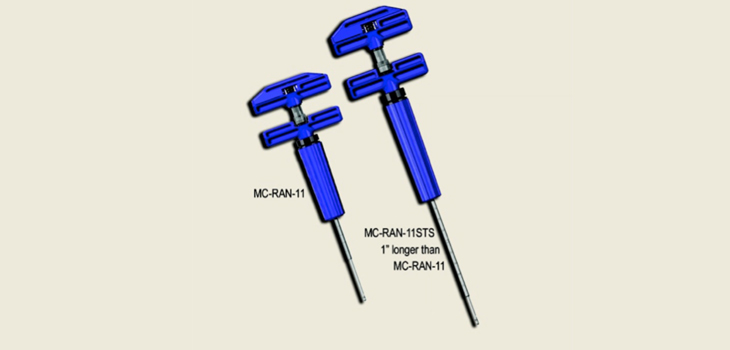
The system is being offered as a retail product available for medical device manufacturers as an OEM device and is available in two sizes.
The company has been around for over a hundred years with a 40, 000 sq. ft. facility in Avon, Massachusetts. The facility is ISO certified.
Author
React:
Discussion
This is a fascinating development. In my practice we've seen similar outcomes with the revised protocol. The key differentiator seems to be patient selection criteria. Has anyone else noticed the correlation with BMI thresholds?
Great point. I'd push back slightly on the conclusion, the sample size in the cited study is too small to draw population-level inferences. That said, the directional signal is compelling and worth a larger RCT.
We implemented a similar approach last year. Early results are promising but we're still gathering 12-month follow-up data. Happy to share our protocol if anyone is interested.
Join the conversation
Orthopedic professionals are discussing this. Sign in and upgrade to read every comment and add your voice.