
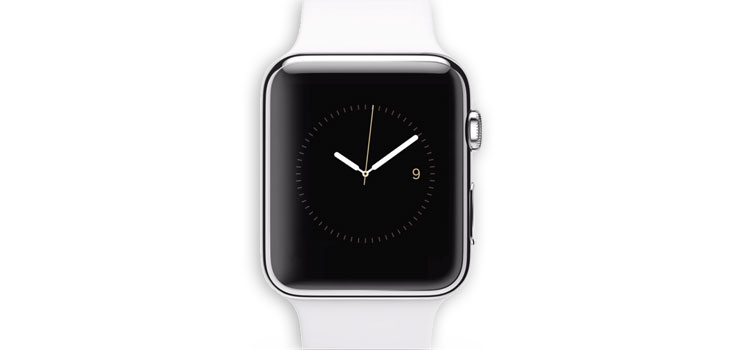
There may be a worm in Apple’s new ready-to-launch product. According to Susan Hall, writing for the Wall Street Journal, the sensors that measure skin conductivity and an electrocardiogram device that is intended to measure a wearer’s heart, are not working reliably on the Apple watch. So those features may be dropped from the watch for the time being.
Apple Watch Skips a Few Beats
1 min read Premium comments
Secondary
While these sensors did not work well on people with hairy arms or too dry skin, neither were they successful in tracking blood-pressure or blood-oxygen levels in their wearers.
Hall explains that the Apple watch is designed to collect and then share medical data with the wearers’ healthcare providers. Despite these beginning glitches, few analysts doubt that “wearables, ” as they are called, will soon be close to the heart of future healthcare.
Fourteen major hospitals, according to Hall, have signed up with Apple to pilot its HealthKit platform and will track patient care in the expectation that the process will help lower operating costs. As many as 600 developers are working on health and fitness apps that they will integrate into the Apple program. Hall quotes Apple officials as saying that the company has a “moral obligation” to “do more” with wearable health monitors and similar devices.
Author
React:
Discussion
This is a fascinating development. In my practice we've seen similar outcomes with the revised protocol. The key differentiator seems to be patient selection criteria. Has anyone else noticed the correlation with BMI thresholds?
Great point. I'd push back slightly on the conclusion, the sample size in the cited study is too small to draw population-level inferences. That said, the directional signal is compelling and worth a larger RCT.
We implemented a similar approach last year. Early results are promising but we're still gathering 12-month follow-up data. Happy to share our protocol if anyone is interested.
Join the conversation
Orthopedic professionals are discussing this. Sign in and upgrade to read every comment and add your voice.