
Researchers are not there yet—but stay tuned. For the first time, human stem cells have grown hair. Alexey Terskikh, Ph.D., associate professor in the Development, Aging and Regeneration Program at Sanford-Burnham Medical Research Institute, Orlando, Florida, reported, ” We have developed a method using human pluripotent stem cells to create new cells capable of initiating human hair growth. The method is a marked improvement over current methods that rely on transplanting existing hair follicles from one part of the head to another.”
Stem Cells Grow Hair on Mice
1 min read Premium comments
Secondary
Michelle Starr, writing for the Genetic Literacy Project, wrote that the stem cell method provides an unlimited source of cells from the patient for transplantation and “is not limited by the availability of existing hair follicles.”
The researchers began with human pluripotent embryonic stem cells. They developed these cells into neural crest cells which can develop into a variety of cells on the head, including brain cells, cartilage, and bone and muscle cells.
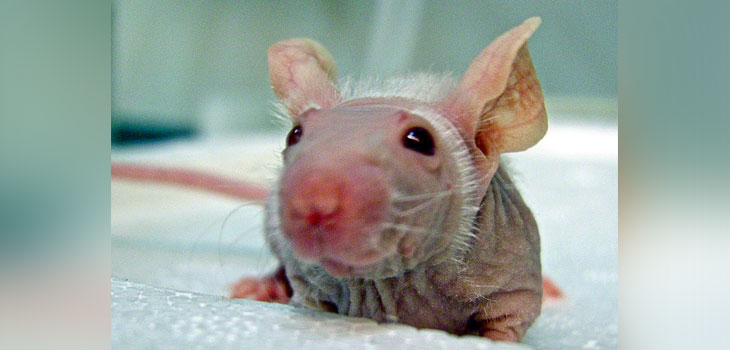
From the neural crest cell point, the team coaxed the cells to grow into dermal papillae cells, the cells that nourish the skin and regulate follicle growth and formation. When they transplanted these cells into hairless mice—the cells flourished and hair grew on the mice.
Another part of the study examined whether the same result could be achieved using dermal papillae cells taken from the scalps of adult humans. The team developed a protocol to drive human pluripotent stem cells to differentiate into dermal papilla cells and when they did, they got hair growth when the cells were transplanted into mice.
About 40 million men and 21 million women in the United States are affected by hair loss. The study is titled, “Derivation of Hair-Inducing Cell from Human Pluripotent Stem Cells”, and is published online in the journal PLOS One.
Author
React:
Discussion
This is a fascinating development. In my practice we've seen similar outcomes with the revised protocol. The key differentiator seems to be patient selection criteria. Has anyone else noticed the correlation with BMI thresholds?
Great point. I'd push back slightly on the conclusion, the sample size in the cited study is too small to draw population-level inferences. That said, the directional signal is compelling and worth a larger RCT.
We implemented a similar approach last year. Early results are promising but we're still gathering 12-month follow-up data. Happy to share our protocol if anyone is interested.
Join the conversation
Orthopedic professionals are discussing this. Sign in and upgrade to read every comment and add your voice.