
Minnesota’s Spineology, Inc. claims Tennessee-based Wright Medical Technology, Inc., “willfully” infringed on one of its patents.
Spineology Sues Wright Medical Over Reamer Patent
1 min read Premium comments
Secondary
In a lawsuit filed on January 27, 2015 in a Minnesota federal court, Spineology says that in October 2006 it sold Wright Medical 50 of its expandable reamers, “solely for Defendant’s use in procedures for core decompression of the femoral head in avascular necrosis. No license to the ‘757 patent was conveyed to Defendant in that sale.”
‘757 Patent
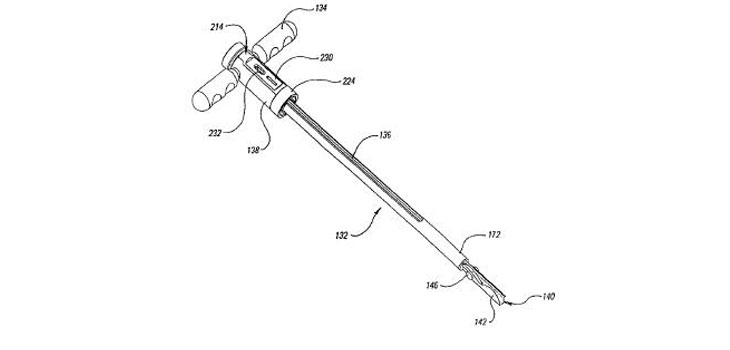
U.S. Patent No. RE42, 757 (the ’757 patent), is entitled “Expandable Reamer” and was reissued on September 27, 2011.
Spineology claims that Wright Medical’s X-REAM percutaneous expandable reamer infringes on their ’757 patent. The company also claims the infringement is willful because it sent Wright Medical a cease-and-desist letter in March 2014 and made numerous calls to Wright Medical’s lawyers informing them of their alleged infringement and asking for a response.
According to the lawsuit, the only response Spineology received was to be told that Wright Technology was considering the patent infringement allegation. Wright Medical made no defense to Spineology’s allegations, according to the suit.
“Defendant [Wright Medical] has not informed Spineology of any specific grounds for a belief that the claims of the ‘757 Patent were not infringed, were invalid, unenforceable; nor did Defendant provide any other specific reason why it would not be liable for infringement…The acts of infringement by Defendant are willful, intentional, and in conscious disregard of Spineology’ s rights in the ‘757 Patent, ” states the lawsuit.
Relief Sought
Spineology is asking the court for a preliminarily judgment and permanently enjoining and restraining Wright Medical from directly infringing, inducing infringement, and/or contributing to the infringement of the ‘757 Patent. The company also wants Wright Medical to pay treble damages for willful infringement. The court is asked to determine damages.
Wright Medical had no comment on the lawsuit.
Author
React:
Discussion
This is a fascinating development. In my practice we've seen similar outcomes with the revised protocol. The key differentiator seems to be patient selection criteria. Has anyone else noticed the correlation with BMI thresholds?
Great point. I'd push back slightly on the conclusion, the sample size in the cited study is too small to draw population-level inferences. That said, the directional signal is compelling and worth a larger RCT.
We implemented a similar approach last year. Early results are promising but we're still gathering 12-month follow-up data. Happy to share our protocol if anyone is interested.
Join the conversation
Orthopedic professionals are discussing this. Sign in and upgrade to read every comment and add your voice.