
Spinal Simplicity, LLC, a spinal device company located at Overland Park, Kansas, has received 510(k) marketing clearance for its system called the Minuteman.
FDA Clears Spinal Simplicity’s Minuteman System
1 min read Premium comments
Secondary
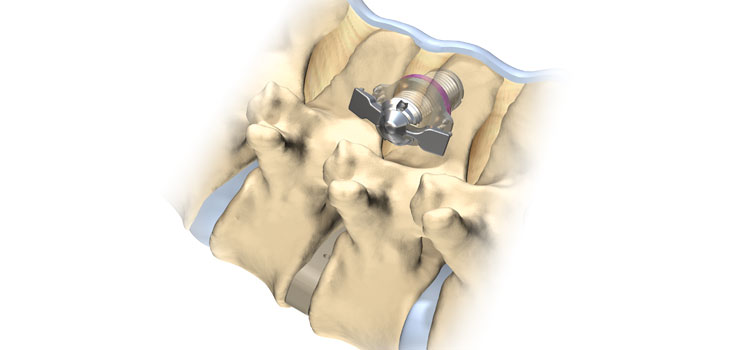
The Minuteman is described as a pre-packaged sterile supplemental posterior fixation system that ”offers a minimally invasive alternative to traditional pedicle screws and other spinous process plates that are placed in open procedures for the treatment of degenerative disc disease, spondylolisthesis, tumors and trauma.”
 According to the press release, the Minuteman can be placed utilizing two minimally invasive approaches to the spine, posterior unilateral or lateral percutaneous. The PercLIF surgical approach and instrumentation “provide a way of quickly and accurately placing the Minuteman between the spinous processes through a one-inch incision.” Company officials say that “this technique eliminates the lateral dissection of sensitive back muscles often associated with lumbar fusions while maintaining an adequate distance from the neural structures.”
“One of the many potential benefits of the Minuteman system is the PercLIF surgical approach to the spine. Direct lateral surgeons will now have the ability to insert a supplemental posterior fixation device with the patient remaining in the lateral decubitous position, typically in about 10 to 15 minutes, ” said Todd Moseley, co-founder of Spinal Simplicity. “As a team, Spinal Simplicity believes this flagship product will provide the foundation for further innovation in the minimally invasive spine market, ” he said.
The company anticipates commercial launch of the Minuteman system in the first quarter of 2015. Harold Hess, M.D., a neurosurgeon, and Todd Moseley, with over 20 years of orthopedic experience, founded the company in 2008.
Author
React:
Discussion
This is a fascinating development. In my practice we've seen similar outcomes with the revised protocol. The key differentiator seems to be patient selection criteria. Has anyone else noticed the correlation with BMI thresholds?
Great point. I'd push back slightly on the conclusion, the sample size in the cited study is too small to draw population-level inferences. That said, the directional signal is compelling and worth a larger RCT.
We implemented a similar approach last year. Early results are promising but we're still gathering 12-month follow-up data. Happy to share our protocol if anyone is interested.
Join the conversation
Orthopedic professionals are discussing this. Sign in and upgrade to read every comment and add your voice.