
Dublin-based Medtronic plc announced FDA 510(k) clearance for expanded indications of its Vertex spinal reconstruction system.
Expanded Indications for Medtronic’s Vertex Spine System
2 min read Premium comments
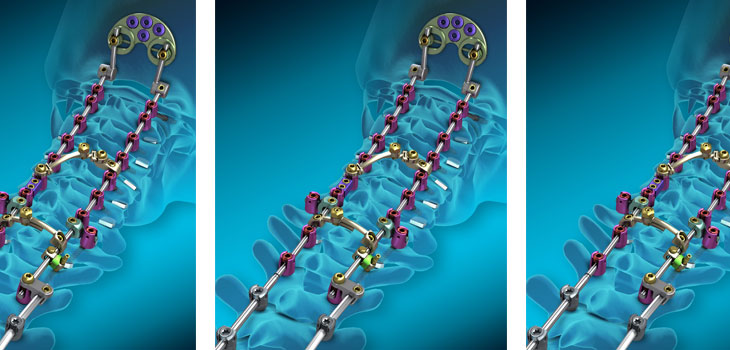
Secondary
The clearance, according to a February 16, 2015 company statement, allows for “lateral mass and pedicle screws to be used as a form of fixation to treat various pathologies occurring in the posterior cervical spine.” The clearance makes the Vertex one of the first FDA-cleared systems available in the U.S. for use of screws at C1-C7.
The expanded use broadens the indications for the system beyond the current upper thoracic fixation use.
Vincent Traynelis, M.D., neurosurgeon at Rush University in Chicago, said the clearance opens up new opportunities for collaboration with medical device companies such as Medtronic to create a sound foundation on which we can advance current techniques, create new solutions, and deliver the next level of care to our patients.”
The Vertex System
Consisting of implants and instruments, the system can be used to surgically treat patients with degenerative disease, fracture, tumors, and/or deformity that can contribute to spinal instability. When paired with the Vertex Occipitocervical Module, the system, according to the company, “offers surgeons adjustability in their treatment options through multiple plate designs, rods, screws, and hooks, enabling them to tailor procedures to each patient’s needs.”
The company states that the system is intended to provide immobilization and stabilization of spinal segments as an adjunct to fusion for the following acute and chronic instabilities of the craniocervical junction, the cervical spine (C1 to C7) and the thoracic spine from T1-T3:
- traumatic spinal fractures and/or traumatic dislocations;
- instability or deformity;
- failed previous fusions (e.g., pseudarthrosis);
- tumors involving the cervical spine; and
- degenerative disease, including intractable radiculopathy and/or myelopathy, neck and/or arm pain of discogenic origin as confirmed by radiographic studies, and degenerative disease of the facets with instability.
The system is also intended to “restore the integrity of the spinal column even in the absence of fusion for a limited time period in patients with advanced stage tumors involving the cervical spine in whom life expectancy is of insufficient duration to permit achievement of fusion.”
Doug King, president of Medtronic’s spine business in Memphis, Tennessee, and senior vice president of Medtronic said, “Medtronic led the way in the pursuit of posterior cervical screw clearance nearly a decade ago, when we applied for and received FDA cervical screw clearance for our Axis Fixation System, which became the predicate device for cervical multi-axial screw fixation that we have just obtained. Through perseverance and collaboration with the FDA, we are excited to have reached this milestone and see it become a reality.”
King added that the company can now partner with physicians and professional spine societies to provide the most “productive educational experiences to further understand and enhance the various techniques for treating conditions in the posterior cervical spine. This achievement is an exciting time for the spinal industry.”
Author
React:
Discussion
This is a fascinating development. In my practice we've seen similar outcomes with the revised protocol. The key differentiator seems to be patient selection criteria. Has anyone else noticed the correlation with BMI thresholds?
Great point. I'd push back slightly on the conclusion, the sample size in the cited study is too small to draw population-level inferences. That said, the directional signal is compelling and worth a larger RCT.
We implemented a similar approach last year. Early results are promising but we're still gathering 12-month follow-up data. Happy to share our protocol if anyone is interested.
Join the conversation
Orthopedic professionals are discussing this. Sign in and upgrade to read every comment and add your voice.