
Margaret Hamburg, M.D., who became the 21st commissioner of the FDA (Food and Drug Administration) almost six years ago, is reportedly leaving the agency. The Washington Post reported on February 5, 2015 that Stephen Ostroff, the FDA’s chief scientist and a former official at the Centers for Disease Control and Prevention, will take over as acting commissioner.
Dr. Hamburg Leaving FDA
4 min read Premium comments
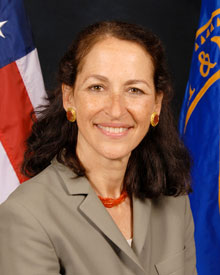
The New York Times reported that Dr. Hamburg told colleagues in an email that she would depart at the end of March. “As you can imagine, ” she wrote, “this decision was not easy. My tenure leading this agency has been the most rewarding of my career.” Forbes magazine named her the world’s 51st most powerful woman in 2014.
Industry Reaction
The medical device industry seemed to love Dr. Hamburg. After she took over in May 2009, the agency’s review times dropped and she was widely praised to fostering a more collaborative environment with industry.
Janet Trunzo, AdvaMed’s senior regulatory executive, commended Dr. Hamburg for her years of dedicated service to FDA and to American public health. “It was under her leadership that the historic Medical Device User Fee Agreement III (MDUFA III) was struck, bringing significant new resources, accountability and improvements to the device review process. Much progress has been made, and her legacy will continue in the on-going program which ensures timely patient access to the best in medical care.”
The Pharmaceutical Research and Manufacturers of America (PhRMA) also praised Dr. Hamburg for her “thoughtful regulation of medicines” and her “strong leadership.” Ian Read, the head of drug giant Pfizer, called Dr. Hamburg “a strong advocate for promoting public health” who supported “innovation in the interest of patients.”
Marion Nestle, a prominent nutrition expert and public health professor at New York University told the Post, “She’s done six years in the hardest job in the world—nobody wants to be regulated and everybody fights the FDA tooth and nail—so I can understand why enough is enough. She managed to keep the agency funded, avoided scandals, and got [food safety], menu labels, and food labels going. Mostly, she kept Congress and the White House from tearing the agency apart.”
Dr. Hamburg: “Place Got Under My Skin”
“The place got under my skin, ” said Dr. Hamburg in an interview reported by the Post. “The honest truth is that I had never expected to stay this long…. It’s an extraordinary agency with amazing people, and a unique and essential mission.”
She leaves as the longest-serving commissioner in the last few decades after serving as New York City’s health commissioner in the 90s. She’s the daughter of physicians and a graduate of Harvard Medical School. Her father was a psychiatrist, and her mother was the first African-American woman to attend Vassar College and to graduate from the Yale University School of Medicine.
“There are few harder jobs in this town, ” said David Kessler, M.D., who was both George H.W. Bush and Bill Clinton’s FDA commissioner. “She’s pushed the ball uphill in a host of areas…. She’s been an excellent steward.”
Critics
But everyone wasn’t gracious in bidding the Commissioner adieu. If industry liked her, she must be suspect. “I’m pleased to see her go, ” said Andrew Kolodny, president of Physicians for Responsible Opioid Prescribing and the head of an addiction treatment center in New York. The Post said Kolodny clashed with the FDA over its failure to curb abuse of the powerful drugs. “Her administration consistently put the interests of the drug companies ahead of public health.”
Michael Carome, director of the health research group at Public Citizen, a nonprofit consumer advocacy organization, said in a written statement reported by the Post that Dr. Hamburg’s resignation marks the “end of a six-year period of weak and ineffective leadership. Throughout Hamburg’s tenure, the FDA has grown even more cozy with the industries that it regulates. Too often, the FDA has succumbed to industry and political pressures, implementing policies and taking actions that tilt too far toward the bottom-line interests of pharmaceutical and medical device companies.”
That would get under anyone’s skin.
Dr. Hamburg told the Post that it’s impossible to please all sides in her role, and that an old joke around the agency is that the FDA has two speeds of approving drugs: too fast or two slow.
Promote and Protect
“My goal has always been to try to make sure that patients and consumers have products they need as rapidly as we can responsibly move them through the process, while always adhering to our standards for safety and efficacy, ” she said.
Inheriting FDA Turmoil
The agency was in some turmoil when Dr. Hamburg arrived in 2009. There were whistleblowers running to Congress accusing the agency’s civilian leaders of overruling agency scientists.
“When I came on board, FDA had been through a number of significant crises. There was low morale and a sense that the agency really needed rejuvenation and redirection, ” Dr. Hamburg said in the Post interview. “I think my leadership was important in really strengthening FDA as an institution.” Before she arrived, the agency had failed to warn of the dangers of the pain drug Vioxx. In 2005, then commissioner Lester Crawford, who had hidden ownership of stock in companies the agency was regulating, abruptly resigned.
Her immediate predecessor, Andrew C. von Eschenbach, M.D., got ensnared in the ReGen Biologics debacle where the agency deviated from its own processes and inappropriately put a small medical device manufacturer out of business.
Reflect and Relax
Dr. Hamburg said she hasn’t spent much time pondering what lies ahead for her. “This is an intense, 24/7 job, where it’s very hard to step back and reflect on what it is that I might want to do next, ” she said. “I just want to take a little time to reflect. And relax.”
She’s earned her rest…and a skin rejuvenation session.
Author
React:
Discussion
This is a fascinating development. In my practice we've seen similar outcomes with the revised protocol. The key differentiator seems to be patient selection criteria. Has anyone else noticed the correlation with BMI thresholds?
Great point. I'd push back slightly on the conclusion, the sample size in the cited study is too small to draw population-level inferences. That said, the directional signal is compelling and worth a larger RCT.
We implemented a similar approach last year. Early results are promising but we're still gathering 12-month follow-up data. Happy to share our protocol if anyone is interested.
Join the conversation
Orthopedic professionals are discussing this. Sign in and upgrade to read every comment and add your voice.