
Surgeons at the University of California, Davis, are testing a device that seems more like a Rube Goldberg invention than a medical one. The item contains a reamer, irrigator, an aspirator system and can also be used for high speed drilling into bone.
Davis Docs Test Do-Everything Device
1 min read Premium comments
Secondary
Drilling creates heat so the device has to be continually cooled with water. The cooling water runs off the device but it is not considered to be wastewater as it contains materials that are not really waste. The water contains mesenchymal stem cells, hematopoietic and endothelial progenitor cells that can be used to make new blood vessels and potent growth factors for signaling cells to heal wounds and regenerate themselves.
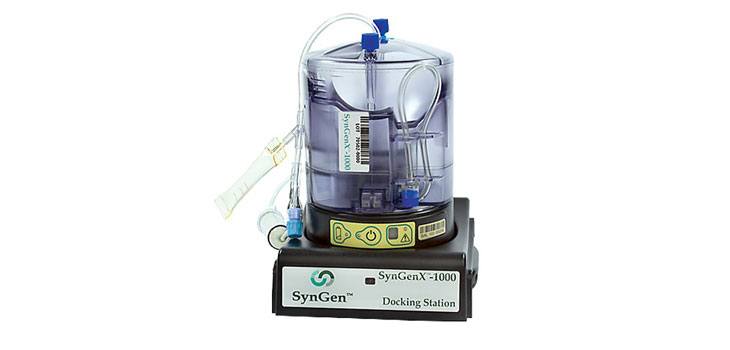
So the wastewater that is not really waste is collected but, since it is too diluted to be useful as it is, it is run through another machine, about the size of a coffee maker (made by SynGen Inc.) that spins it down to isolate the stem cell components.
The idea, according to the Helio–Orthopaedics Today writer, is to use the machine in the operating room to rapidly produce a concentration of stem cells that can be delivered to a patient’s non-union fracture during a single surgery.
Mark Lee, M.D., an associate professor of orthopaedic surgery at UC Davis said of the device, “its small size and rapid capabilities allow autologous stem cell transplantation to take place during a single operation in the operating room, rather than requiring two procedures separated over a period of weeks. This is a dramatic difference that promises to make a real impact on wound healing and patient recovery.”
Author
React:
Discussion
This is a fascinating development. In my practice we've seen similar outcomes with the revised protocol. The key differentiator seems to be patient selection criteria. Has anyone else noticed the correlation with BMI thresholds?
Great point. I'd push back slightly on the conclusion, the sample size in the cited study is too small to draw population-level inferences. That said, the directional signal is compelling and worth a larger RCT.
We implemented a similar approach last year. Early results are promising but we're still gathering 12-month follow-up data. Happy to share our protocol if anyone is interested.
Join the conversation
Orthopedic professionals are discussing this. Sign in and upgrade to read every comment and add your voice.