
Dane Miller had a dream while sailing with his buddy, Jerry Ferguson, back in 1975. He dreamed of a new way to make surgical implants. At the time such a dream must have seemed crazy, improbable, somewhere off in left field.
The Passing of Dane Miller
9 min read Premium comments
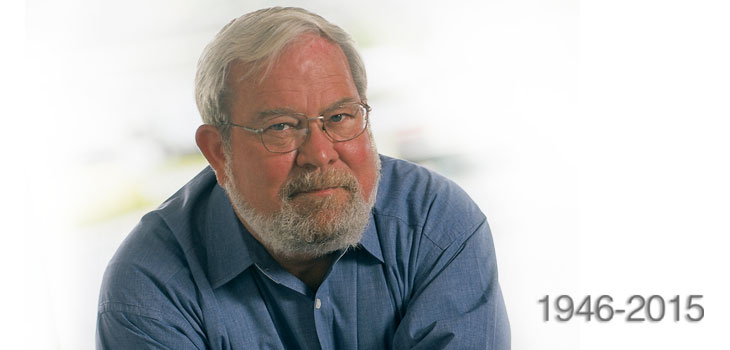
Remembrances
When Dane Miller, Ph.D. died on February 10, 2015 (of MDS, a rare form of leukemia) his 40-year-old dream had not simply succeeded, it had changed the lives of millions of people. But even more than that, the way he achieved his dream made Dane a living legend.
Dr. Miller is survived by his wife Mary Louise and his daughters, Kimberly and Stephanie of Valparaiso, Indiana. In lieu of flowers, please send donations to:
| Innovative Cancer Therapy Fund Dr. Yogen Saunthararajah Cleveland Clinic 9500 Euclid Avenue, R40 Cleveland, Ohio 44195 | St. Anne’s Episcopal Church 424 W. Market Street Warsaw, IN 46580 | Women’s Care Center Foundation 360 N. Notre Dame Ave. South Bend, IN 46617 |
Dane’s Dream
Dane believed that titanium was the most biocompatible metal available for implant devices. While working for Zimmer USA, he tried to introduce the material, but couldn’t convince anyone that the body wouldn’t reject the metal. So he had a small rod implanted into his own arm.
Dane, Ferguson, Niles Noblitt and Ray Harroff founded Biomet, Inc. in 1977. Biomet—Bio for Body, met for metallurgical implants.

Acting on that dream took some courage and was a family affair with the young group. Dane and his wife, Mary Louise, took a long-range view. Her father was a physician and she knew about long hours.
As newlyweds, the couple lived in an 8-foot by 40-foot trailer. So when they started Biomet in a converted barn in Warsaw, Indiana, the family just scaled back and lived frugally. “The children and I were willing to make any sacrifice, ” she said in a published interview. “We knew if we did it right we could achieve this goal.”
The group had just $725, 000 of their own money, including a $500, 000 loan from the Small Business Administration. They posted a $63, 000 net loss the first year.
The wives took turns baby-sitting so they could go to the office and sweep the floors, type out invoices or answer phones. The men scrubbed toilets, picked up garbage, took orders and shipped product.
Garry England, the company’s 41st employee said in a published interview, “I remember Dane doing wiring, office construction, sweeping, shoveling snow. It was a ‘get-it-done’ attitude that was very motivational to us (employees). In those days, you knew everybody who worked here by their first name; you knew their spouses’ names and half their kids’ names.”
The financial risk was big and the families put it all on the line. Dane and Mary Louise had personal guarantees of over $1 million dollars in debt and at the time had a net worth of $100, 000.
Dane’s Tenacity
Instead of intimidating him, the prospect of failure inspired Dane. “Webster’s dictionary really should carry his picture next to ‘tenacity’ because Dane never gives up, ” Ferguson said in a published interview. “I mean he never gives up. It doesn’t matter how bad things get.” As a devout Presbyterian, Dane said he’s not alone. “I rely on my spiritual underpinnings to keep me upright and moving forward.”
“If we tried and failed, we were still young enough to pick ourselves up and try again, ” Dane told students at the Kelley School of Business as part of the Distinguished Entrepreneur-in-Residence Series. “You don’t want to look back and say, ‘I wish I’d tried.’ The risk of failure for start-up companies is very high. So? You start over again.”
Biomet Culture
One of the goals of the new company was to take suggestions from orthopedic surgeons and come out with improved implants faster than their big competitors. Right from the start, the priorities were: solid engineering, customer responsiveness, superior clinical results and top-notch quality.
Dane said the company’s culture was about taking a hands-on approach to their business. “Our employees get it done. There is no job at Biomet that isn’t everyone’s job. It’s our company. As we grow larger, we don’t want to drift into a habit of acting as if we’re all managers, not employees or shareholders.”
By early 1979 most of their seed money was gone. But the group was able to obtain $500, 000 in equity from a venture capital investor and kept Biomet afloat until the first profitable year was realized in 1980 and a move into a new facility.
Dane: “They All Thought I Was Nuts”
By 1980, Biomet earned $1.1 million in net sales. The company went public in 1981, had Wall Street’s attention by 1983, and in 1987, with $96.7 million in net sales, was deemed a “hot growth company.” In 1984, Dane predicted Biomet would be a billion dollar company by 2000.
“They all thought I was nuts, ” said Dane. “How could anyone imagine by the year 2000 we’d be doing a billion dollars? And, in fact, in the fiscal year 2000, we reached a billion dollars.”
There were some technology hiccups.
In 1983, came the Dermizip, which was lauded as the “sizzle” that sold the August 1983 public offering of 3 million shares. This product was supposed to catapult Biomet into the surgical wound closure market. So, of course, Dane had the new “attachment apparatus” used on his own arm.
But, it didn’t hold. Not one to quit, Dane flew to O’Hare Airport to meet John Sheehan, M.D., the surgeon who had designed the product. There, in the hallway, Dane had the original product replaced and flew off to Europe. After ten days and no healing, he had the Dermzip removed in Sweden.
Dermizip never formally went to market and in-house it became known as “Dermiscar.” Said one former team member, “I think Dane was the only person we left a scar on.”
But it was also around this time that Dane had the test titanium rod removed from his arm. Histology and biocompatibility tests proved exactly what he had predicted—metallurgically, the titanium came out exactly like it went in. Dane didn’t just use his own devices on himself, his grandmother, Grace Shumaker, was the first recipient of a Biomet-made artificial hip.
Dane and Mary Louise

Dane was born in Bellefontaine, Ohio. He and the former Mary Louise Schilke met as teens in Springfield, Ohio, at a swim club. They were married on February 19, 1966. They were married just nine days short of 49 years.
In the beginning the young couple moved every six weeks between Dayton, Ohio, where Miller worked, and Flint, Michigan, so he could attend General Motors Institute (now Kettering University). He followed his passion to a master’s degree and, later, a Ph.D. in bio-medical engineering from the University of Cincinnati.
With those credentials, the couple began his professional career at the Frigidaire Division, GMC in Dayton, Ohio, from 1964 to 1969, working as a cooperative engineering student. From 1972 to 1975 he was employed as the director of biomedical engineering at Zimmer. His responsibilities included engineering, prototype design and fabrication, as well as basic research support for all new product development programs. He was also responsible for coordinating and developing a custom and special product group, including marketing, sales, and manufacturing of custom products.
From 1975 to 1977, he was Director of Biomedical Engineering for Cutter Biomedical, a division of Cutter Laboratories, Inc. Dane and Mary Louise left Cutter Biomedical to serve as president and CEO of the new company.
Ortho Love
Surgeons and industry professionals loved Dane.
Among surgeons, Dane was known for his engineering savvy and responsiveness. Merrill Ritter, M.D., a Mooresville, Indiana, orthopedic surgeon, said this about Dane: “He is just a regular guy, but he is a very brilliant guy. He doesn’t push his brightness; it just flows out of him.”
Todd Albert, M.D., Surgeon in Chief and Medical Director at Hospital for Special Surgery in New York said Dane was an “amazing man—innovative, brilliant yet extremely down to earth.
“Dane is in the DNA of Biomet and Biomet is in his, ” wrote OTW Publisher Robin Young in 2006.
“Where Dane ended and Biomet began has always been hard to see. Customers who needed to call him could reach Dane Miller at home. Dane was, perhaps, the only major orthopedic company CEO who handed out his home and cell phone numbers to customers. And for anyone else, he listed the number in the Warsaw, Indiana, phone book. He also, famously, answered his own phone in the office.”
Dane built Biomet into a company with 6, 000 worldwide employees under his watch.
Fighting for the Team
As a public company, Biomet was no longer entirely under Dane’s control. In 2006, the company’s board of directors suggested he retire after 28 years of service, and he did.
But Dane and Mary Louise didn’t want to abandon their team members and planned their comeback.
“My wife and I talked seriously about riding off into the sunset, ” Dane said. “Then we started thinking about people. Biomet wasn’t a company. It was a collection of very talented, very motivated, very dedicated people. And I wasn’t comfortable with simply turning my back and riding off into the sunset. So I began ‘my little project’ of putting together about $10 billion in capital to take the company private.”
In 2007, with a consortium of private equity firms, Miller bought back Biomet for $11.4 billion, again living up to his credo of not wanting to look back and wish he’d tried. In 2014, Zimmer offered over $13 billion to acquire Biomet. The deal is expected to be completed this spring.
In his semi-retired role, Dane said he’s doing exactly what he wanted to do as “Biomet’s grandfather.”
His actual grandson, Dane said, wants to be just like him when he gets older. Then, in true Dane style, he added, “That makes my wife very unhappy.”
Community
Dane’s community activities have included serving as a director of Kosciusko Community Hospital, a member of the President’s Council for Grace College and Seminary, a board member of the Kosciusko Leadership Academy and a board member of the University of Chicago Hospitals and Health System, according to a Forbes magazine profile.
Retha Hicks, Winona Lake’s Clerk/Treasurer said, “There is no way to put into words to describe what he’s put into the community, and he didn’t want anything in return except to live in a nice community. The entire community has changed in outlook and image. Everyone pitches in and is inspired to help because they saw the results of the revitalization.”
Warsaw Celebrates a Legacy
Zimmer President and CEO Dave Dvorak told OTW, “On behalf of the entire Zimmer team, we are deeply saddened by the loss of Dane Miller. Dane was a well-respected leader in our industry and in our community. I considered him a friend, as did so many who have had the opportunity to get to know him over the years…. Dane will be greatly missed.”
“The Biomet family is profoundly saddened by the passing of Dane A. Miller, Ph.D., ” wrote current Biomet CEO, Jeff Binder.
“It is impossible in one short statement to give justice to his impact on our company, on our industry, and on the communities where we operate—especially Warsaw and Winona Lake, Indiana. It is also impossible to describe adequately Dane’s impact on the lives of our team members and on the members of the orthopaedic community with whom he worked and developed friendships over many years.”
He added that Dane used his biomedical engineering background to drive advancements in biomaterials and implant design that helped patients around the world.
On the cultural side, Binder wrote, “Dane thought of himself as an ‘environmental engineer, ‘ and he fostered an ownership culture where team members were empowered to make decisions, take reasonable risks and actively respond to the needs of our customers and their patients. Dane was one of industry’s first leaders to use the phrase ‘team member’ to describe his company’s employees. He once told me that the best description of Biomet’s culture was that of a ‘can-do family.’”
February 20th Memorial Service
“A great man has gone to be with the Lord, ” said a statement from Grace College where a Memorial Service to celebrate Dane’s life will be held on February 20, 2015 at the Manahan Orthopaedic Capital Center. The service will be streamed live at: http://www.grace.edu/dane-miller
“We know that he and his wife, Mary Louise, have impacted many of you personally…We are so thankful for the life Dane led while on earth. His legacy will have a lasting impact on the entire community.”
The dream born on the sailing boat remains alive.
Author
React:
Discussion
This is a fascinating development. In my practice we've seen similar outcomes with the revised protocol. The key differentiator seems to be patient selection criteria. Has anyone else noticed the correlation with BMI thresholds?
Great point. I'd push back slightly on the conclusion, the sample size in the cited study is too small to draw population-level inferences. That said, the directional signal is compelling and worth a larger RCT.
We implemented a similar approach last year. Early results are promising but we're still gathering 12-month follow-up data. Happy to share our protocol if anyone is interested.
Join the conversation
Orthopedic professionals are discussing this. Sign in and upgrade to read every comment and add your voice.