
The FDA has cleared Paris and San Francisco-based SpineGuard S.A.’s PediGuard technology for use by surgeons in the U.S.
Clearance and Patent Grant for PediGuard
2 min read Premium comments
Secondary
On February 3, 2015, the company announced that its technology, which it claims allows surgeons to do a better job of placing pedicle screws into patients during a minimally invasive procedure and reduces the amount of radiation exposure to those surgeons during surgery, received the FDA clearance.
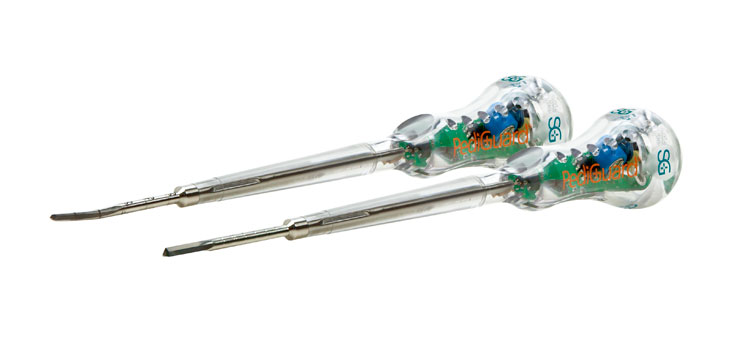
PediGuard, according to the company, is the world’s first and only handheld device “capable of alerting surgeons to potential pedicular or vertebral breaches. Real-time feedback is provided via audio and visual signals.” The device replaces the typical use of fluoroscopy used to help surgeons “see” when not using open procedures. But fluoroscopy, says the company, exposes an average surgeon to the maximum allowable lifetime exposure of radiation for workers within ten years of practice.
Over 35, 000 procedures have been performed with the device worldwide. The company cites several studies published in peer-reviewed medical and scientific journals that have demonstrated that “PediGuard detects 98% of pedicle breaches, presents an average screw placement accuracy of 97% (vs. 92% for surgical navigation), provides 3-fold less pedicle perforations than with free-hand technique and a 3-fold reduction in neuro-monitoring alarms. It also limits radiation exposure by 25-30% and decreases by 15% the time for pedicle screw placement.”
“Smart Screw” European Patent
The company also announced that it has been granted a patent by the European Patent Office under the number 1781198 for the integration of its Dynamic Surgical Guidance technology directly into a pedicle screw, or its “smart screw.”
“This grant follows previous patent grants in the USA and China and, combined, means we now have an exceptionally strong and broad IP position relating to the ‘Smart Screw’ technology platform.” said Stéphane Bette, CTO and co-founder of SpineGuard.
“There is a well-documented safety issue associated with pedicle screw placement and a striking unmet need for differentiation among the numerous pedicle screw systems in an ultra-competitive arena. This new block in our IP portfolio brings us incremental value and confidence as we complete development and prepare the roll-out of our dynamically guided screw products.” added Pierre Jérôme, CEO and co-founder of the company.
For 2014, the company reported revenue of €4, 436 thousand, (approx. $5 million) down 3.9% as reported (-4.1% constant currency) vs. full-year 2013. Growth returned in the second half of 2014 at +10.4% compared with the first half of 2014 and +1.4% compared with the second half of 2013. Units sold were 6, 063 in 2014 compared with 6, 308 in 2013.
Author
React:
Discussion
This is a fascinating development. In my practice we've seen similar outcomes with the revised protocol. The key differentiator seems to be patient selection criteria. Has anyone else noticed the correlation with BMI thresholds?
Great point. I'd push back slightly on the conclusion, the sample size in the cited study is too small to draw population-level inferences. That said, the directional signal is compelling and worth a larger RCT.
We implemented a similar approach last year. Early results are promising but we're still gathering 12-month follow-up data. Happy to share our protocol if anyone is interested.
Join the conversation
Orthopedic professionals are discussing this. Sign in and upgrade to read every comment and add your voice.