
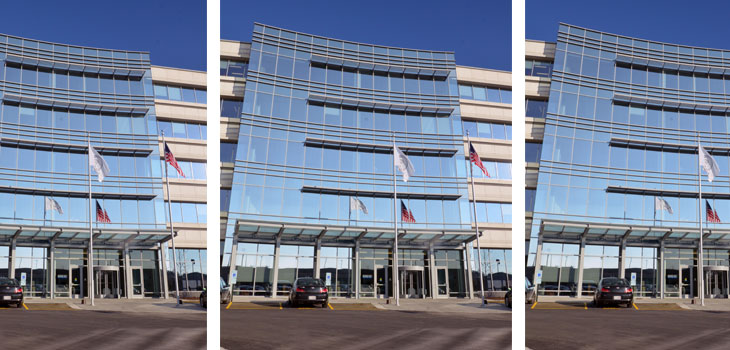
The American Academy of Orthopaedic Surgeons (AAOS) officially opened its new 180, 000-square foot, five-story building on February 21, 2014 in Rosemont, Illinois.
AAOS Opens New HQ and Learning Center
1 min read Premium comments
Secondary
The building will house the Academy’s headquarters and more than 25 orthopedic organizations and a state-of-the art Orthopaedic Learning Center (OLC). Along with AAOS, the equity partners for the headquarters are: the Arthroscopy Association of North America (AANA), the American Orthopaedic Society for Sports Medicine (AOSSM), the American Association of Hip & Knee Surgeons (AAHKS), and the Orthopaedic Learning Center (OLC).
Frederick Azar, M.D., AAOS’s president, said, “This beautiful new building, with its state-of-the-art technology and space for growth, flexibility, and distance learning to enhance patient care, represents a unified commitment to the future of orthopaedics and orthopaedic education.”
The Academy had outgrown its previous headquarters and wanted to expand and upgrade the Learning Center.
The new OLC, according to an Academy press release, is twice the size of the previous facility and offers:
- Distance learning opportunities, including an international reach for web-based courses;
- A BIO Skills Lab with a large format high-definition display system, digital light processing (DLP) projectors and high-definition broadcast cameras;
- A 24-station skills lab that can be divided into two 12-station labs to accommodate multiple courses at the same time;
- An auditorium able to seat up to 180 participants, divisible into three separate rooms, with state-of-the-art technology including a 3-D projector; and,
- A central audio-visual (AV) control room for all OLC technology.
“Today, the Academy unveils the future of orthopaedics, ” said Karen Hackett, FACHE, CAE, the organization’s CEO.
Construction on the new, energy-efficient building began in August 2013 and was completed in approximately 18 months. The Academy will be taking up about two and a half of the five stories. The other orthopedic organizations will take up the rest. Hackett said it was important to the Academy to keep the orthopedic community in close proximity for easier communication.
Author
React:
Discussion
This is a fascinating development. In my practice we've seen similar outcomes with the revised protocol. The key differentiator seems to be patient selection criteria. Has anyone else noticed the correlation with BMI thresholds?
Great point. I'd push back slightly on the conclusion, the sample size in the cited study is too small to draw population-level inferences. That said, the directional signal is compelling and worth a larger RCT.
We implemented a similar approach last year. Early results are promising but we're still gathering 12-month follow-up data. Happy to share our protocol if anyone is interested.
Join the conversation
Orthopedic professionals are discussing this. Sign in and upgrade to read every comment and add your voice.