
Stryker Corporation announced on January 5, 2011 that it was acquiring a London-based healthcare company.
Stryker Buys London Healthcare Company
1 min read Premium comments
Secondary
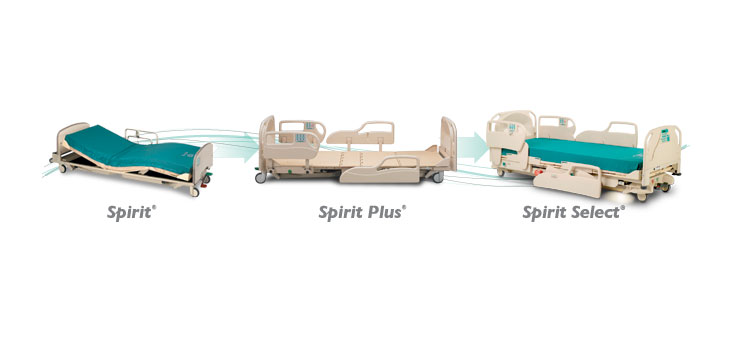
No, it wasn’t Smith & Nephew and it’s not London, England. The acquisition is London, Ontario-based CHG Hospital Beds, Inc. The company designs and makes low-height hospital beds and related accessories.
With over 35 years of experience, the company sells in markets across Canada, the U.S. and the United Kingdom. It was an all-cash transaction and no dollar amount was announced.
According to a Stryker press release, CHG’s beds “allow a patient’s feet to sit flat on the floor while he/she is sitting at the edge of the bed. The low-height design helps reduce the risk of patient falls that are related to entering and exiting hospital beds. Among CHG’s innovative offerings is the recently launched Spirit One bed which is an expandable low-height bariatric bed for the acute care segment.”
CHG’s website says the company “revolutionized” the healthcare industry through the development of the first low hospital bed in 1996, and the first acute care low bed in 2003. The company holds eight low hospital bed patents.
Stryker Group President Tim Scannell said the acquisition, “aligns with Stryker’s commitment to offering products that enhance the quality of care for both patients and healthcare professionals; in this case, aiding in the prevention of patient related injuries resulting from a fall from a hospital bed.”
The transaction is expected to be neutral to Stryker’s 2015 earnings per share excluding acquisition, integration-related and intangible amortization charges and accretive thereafter.
Author
React:
Discussion
This is a fascinating development. In my practice we've seen similar outcomes with the revised protocol. The key differentiator seems to be patient selection criteria. Has anyone else noticed the correlation with BMI thresholds?
Great point. I'd push back slightly on the conclusion, the sample size in the cited study is too small to draw population-level inferences. That said, the directional signal is compelling and worth a larger RCT.
We implemented a similar approach last year. Early results are promising but we're still gathering 12-month follow-up data. Happy to share our protocol if anyone is interested.
Join the conversation
Orthopedic professionals are discussing this. Sign in and upgrade to read every comment and add your voice.