
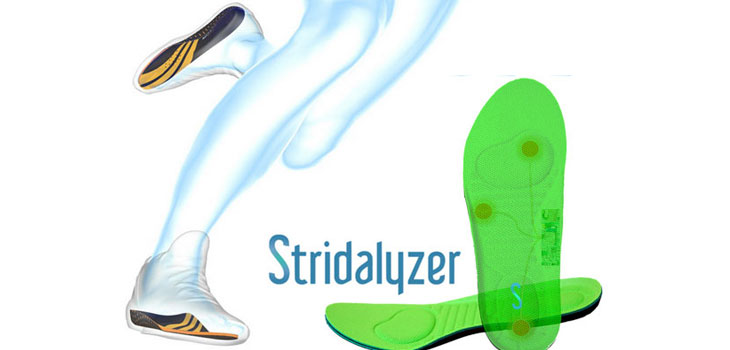
Two young athletes from Bangalore, India—Anshuman Singh and Shuvadeep Sarkar—have created the world’s first smart insole, made specifically for runners. The insole, called Stridalyzer, can estimate, analyze and alert runners about potential foot and knee injuries. Their young start-up company is ReTiSense.
Smart Insole Alerts Runners to Injuries
1 min read Premium comments
Secondary
Every year, about 65%-70% of all runners sustain injuries, according to Singh. Knee injuries account for 42% of all running injuries, which implies 1 in 4 runners, will suffer knee injuries. Ninety percent of Marathon trainers are prone to injuries, he said.
Singh explains, “Knee injuries are extremely common in runners, but no data-driven method existed for runners to get an idea of whether, and how severely, they are at risk for knee injuries. With Stridalyzer, we hope to deliver that knowledge and awareness to runners, so they can make better decisions about their running form and strategy.”
Stridalyzer uses a pair of sensor-connected insoles to collect data about the motion dynamics of a runner. According to their news release, the insoles pair with a Smartphone through Bluetooth LE, capture and send that data to the app on a regular basis. The app, working together with cloud-based analytics, provides real-time guidance to the runner on the aspects of his or her run that might expose them to the risk of injury. After their run, users get a summarized review of their performances, a running form score, and detailed guidance on how to improve their form and performance on future runs.
Author
React:
Discussion
This is a fascinating development. In my practice we've seen similar outcomes with the revised protocol. The key differentiator seems to be patient selection criteria. Has anyone else noticed the correlation with BMI thresholds?
Great point. I'd push back slightly on the conclusion, the sample size in the cited study is too small to draw population-level inferences. That said, the directional signal is compelling and worth a larger RCT.
We implemented a similar approach last year. Early results are promising but we're still gathering 12-month follow-up data. Happy to share our protocol if anyone is interested.
Join the conversation
Orthopedic professionals are discussing this. Sign in and upgrade to read every comment and add your voice.