
ECA Medical Instruments, Inc. claims to have developed a “game changer” with the “potential to transform healthcare economics.”
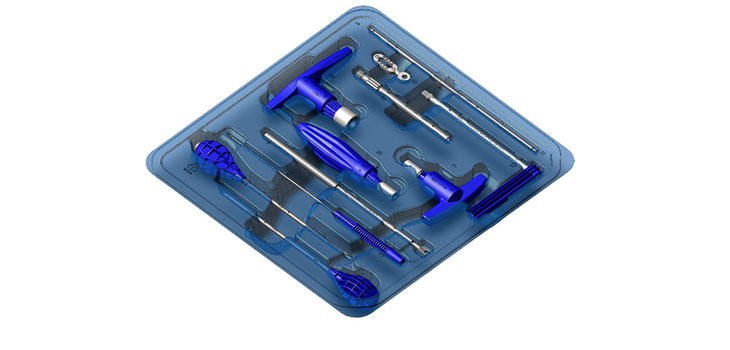
First Disposable Spine Implant Fixation Kit Cleared by FDA
1 min read Premium comments
Secondary
The claim is based on FDA clearance of the company’s disposable spine implant fixation kit announced on January 16, 2015.
Calling it the first such sterile-packed kit to gain FDA clearance, the product “features a full complement of fixation instruments in a single sterile packed tray including proprietary and industry first cannulated torque-limiters, ratchets and fixed drivers.” All the kits and instruments are disposable, biodegradable or recyclable. These specialized instruments are needed by surgeons to perform both open and minimally invasive surgeries (MIS) in both inpatient and outpatient facilities.”
“This single tray of instruments is game changing for our industry and FDA approval [FDA clearance] signals a new era is taking hold with potential to transform healthcare economics, ” said John Nino, president and CEO of ECA Medical Instruments. “Surgeons, hospitals, ambulatory surgical centers (ASCs) and patients all benefit from cost savings, increased safety and superb outcomes.” The focus will be on serving ASCs.
The instruments are to be used with the Intelligent Implant Systems, LLC’s (IIS) Revolution Spinal System and will be available in the U.S. starting second quarter 2015. The announcement stated the ISS system offers a “simplified design for posterior spinal fixation implant of single or two-level constructs.”
“By providing sterile state-of-the-art implants combined with a single sterile tray of disposable instruments by ECA, we are leading the way to a better approach for spinal surgery, ” said Marc Richelsoph, president and CEO of Intelligent Implant Systems.
Nino’s bold prediction may not be idle. According to the company, “every 20 seconds of every day” an ECA torque instrument is used to secure a medical implant in a patient. The company says it has manufactured and delivered over 25 million precision torque instruments to the world’s leading producers of cardiac rhythm management, neuromodulation, cardiovascular and orthopedic and spine implants “resulting in over 500 million surgical actuations.”
Author
React:
Discussion
This is a fascinating development. In my practice we've seen similar outcomes with the revised protocol. The key differentiator seems to be patient selection criteria. Has anyone else noticed the correlation with BMI thresholds?
Great point. I'd push back slightly on the conclusion, the sample size in the cited study is too small to draw population-level inferences. That said, the directional signal is compelling and worth a larger RCT.
We implemented a similar approach last year. Early results are promising but we're still gathering 12-month follow-up data. Happy to share our protocol if anyone is interested.
Join the conversation
Orthopedic professionals are discussing this. Sign in and upgrade to read every comment and add your voice.