
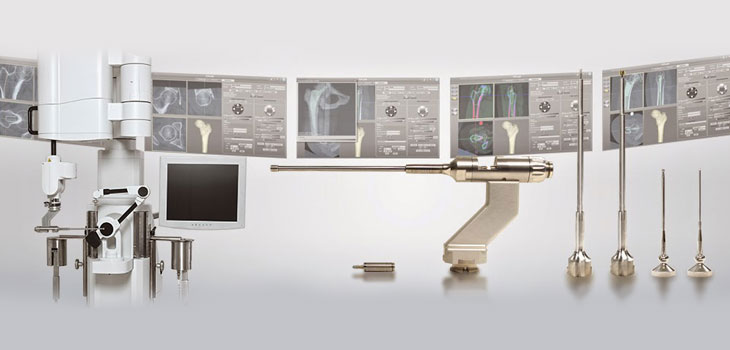
THINK Surgical, Inc., formerly the Curexo Technology Corporation, has received 510(k) clearance from the U.S. Food and Drug Administration for its new TSolution One Surgical System for total hip arthroplasty (THA). The robotic system consists of two technologies. They are the Tplan 3D planning workstation and the TCAT computer-assisted tool. The two work together to bring about what the company calls “an exceptional degree of precision and accuracy” to total joint replacement surgery.
FDA Clears Think Surgical’s 3D Workstation
1 min read Premium comments
Secondary
The TPLAN 3D workstation assists surgeons with preoperative planning by creating a 3D model of the patient’s anatomy based on CT images. Using the workstation tools the surgeon can plan an optimal fit and alignment for each patient.
According to the press release: “In the operating room, the surgeon uses the TCAT computer-assisted tool and the patient’s preoperative plan created by the surgeon to prepare the bone cavity and joint surface. Under the surgeon’s direct control, the TCAT system mills the bone with sub-millimeter accuracy to achieve optimal fit of the implant the surgeon chose for the patient’s joint replacement.”
According to company officials, “the Tsolution One core technologies have been used in thousands of total joint replacements for both hips and knees worldwide.” The company is based in Fremont, California.
Author
React:
Discussion
This is a fascinating development. In my practice we've seen similar outcomes with the revised protocol. The key differentiator seems to be patient selection criteria. Has anyone else noticed the correlation with BMI thresholds?
Great point. I'd push back slightly on the conclusion, the sample size in the cited study is too small to draw population-level inferences. That said, the directional signal is compelling and worth a larger RCT.
We implemented a similar approach last year. Early results are promising but we're still gathering 12-month follow-up data. Happy to share our protocol if anyone is interested.
Join the conversation
Orthopedic professionals are discussing this. Sign in and upgrade to read every comment and add your voice.