
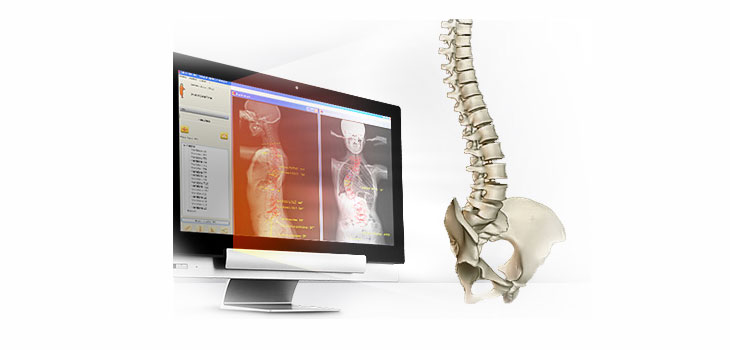
The U.S. Food and Drug Administration has approved hip EOS, a 3D hip arthroplasty planning software product based on EOS stereoradiographic imaging. The program was developed by OneFit medical, an EOS imaging company, located in France. EOS officials state that their medical imaging system is based on technology associated with George Charpak who won the Nobel Prize for physics.
FDA Approves 3D Hip Arthroplasty Software
1 min read Premium comments
Secondary
According to the press release, using low-dose images, the software enables surgeons to perform pre-surgical planning, implant selection, and visualize pre-operatively the restoration expected from a total hip arthroplasty prior to surgery. hipEOS received a CE Mark in March 2014.
Marie Meynadier, Ph.D., CEO of EOS imaging, said, “hipEOS is the first step of our strategy to fully utilize EOS’ unique stereo-radiographic 2D/3D patient data in software tools that will help surgeons plan and execute precise surgical and non surgical treatments. We are very happy to have been granted market approval in the U.S. and to extend this offering, which has received a very positive feedback at the French SOFCOT launch in November, to our U.S. users and future users.”
EOS is now authorized to market in 34 companies. It has subsidiaries in Besancon, France, Cambridge, Massachusetts, Montreal, Canada and Frankfurt, Germany.
Author
React:
Discussion
This is a fascinating development. In my practice we've seen similar outcomes with the revised protocol. The key differentiator seems to be patient selection criteria. Has anyone else noticed the correlation with BMI thresholds?
Great point. I'd push back slightly on the conclusion, the sample size in the cited study is too small to draw population-level inferences. That said, the directional signal is compelling and worth a larger RCT.
We implemented a similar approach last year. Early results are promising but we're still gathering 12-month follow-up data. Happy to share our protocol if anyone is interested.
Join the conversation
Orthopedic professionals are discussing this. Sign in and upgrade to read every comment and add your voice.