
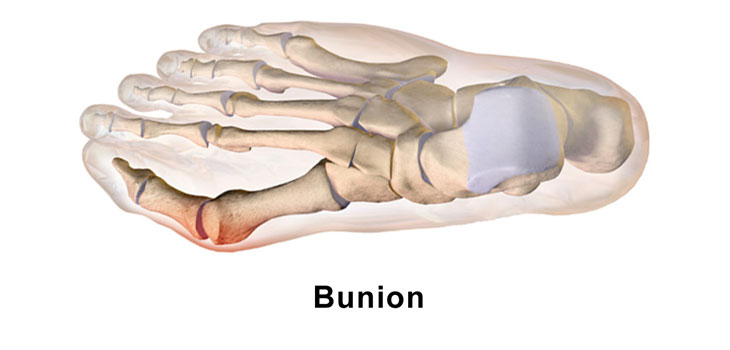
A major driver of foot and ankle surgery is hallux valgus—more commonly known as “bunions”. Risk factors for the ailment, according to Diana Swift, writing for MedPage Today, are being female, African American, having flat feet (pes planus) and knee or hip osteoarthritis. Being of an older age is another risk factor. A study, published in Arthritis Care and Research, found that as many as 70% of African American women may suffer from hallux valgus.
Bunion Study Identifies Risk Factors
2 min read Premium comments
Secondary
Physical therapist Yvonne Golightly, Ph.D., a research assistant professor of epidemiology at the University of North Carolina led the study of 1, 695 participants in rural North Carolina. The researchers were able to compile clinical and demographic data on 1, 502 subjects. The mean age of the subjects was 68.4 years; 68% were women and 30% were African American. According to Swift, this is the first study to report on hallux valgus by sex and race groups.
Researchers found that the occurrence of hallux valgus in the total sample was 64% with 69% of African-American men in the study afflicted. African-American women came in at 70%, Caucasian men at 54% and Caucasian women at 65%.
Swift reported that, contrary to expectations, “subjects with a higher body mass index (BMI) had lower odds of hallux valgus than did those with a normal BMI. This prompted the investigators to write that “genetics and improper shoe wear should be explored as risk factors for hallux valgus among those with normal body weight.”
The researchers checked each participant for the presence of osteoarthritis and found an association between hallux valgus and knee-hip osteoarthritis. This may represent a tendency for bone formation in certain adults or may occur with or as a result of OA of the first metatarsophalangeal joint, they wrote.
Hallux valgus is associated with foot pain, poor balance and, among older adults, a high risk of falling. “Identifying adults with hallux valgus earlier in the life course may aid in preventing later functional limitations, such as impaired balance, in older populations, ” the investigators wrote.
Swift noted that, “Future investigations should also examine footwear, occupational factors, weight changes across adulthood, genetic variables, and first metatarsophalangeal OA to guide early intervention.”
Author
React:
Discussion
This is a fascinating development. In my practice we've seen similar outcomes with the revised protocol. The key differentiator seems to be patient selection criteria. Has anyone else noticed the correlation with BMI thresholds?
Great point. I'd push back slightly on the conclusion, the sample size in the cited study is too small to draw population-level inferences. That said, the directional signal is compelling and worth a larger RCT.
We implemented a similar approach last year. Early results are promising but we're still gathering 12-month follow-up data. Happy to share our protocol if anyone is interested.
Join the conversation
Orthopedic professionals are discussing this. Sign in and upgrade to read every comment and add your voice.