
There is no pretty way to say this. Docs got fooled again.
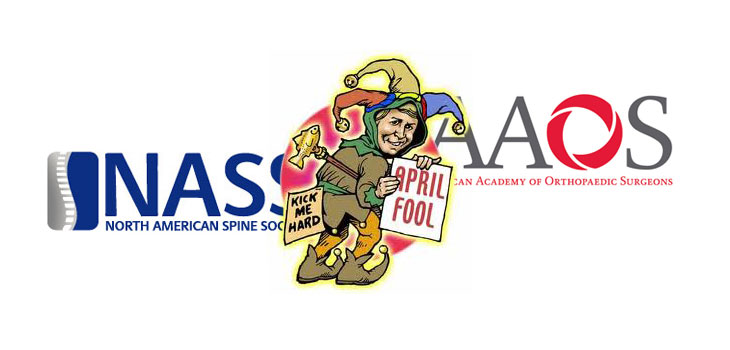
No SGR Fix. Docs Fooled Again
2 min read Premium comments
Secondary
After millions in campaign contributions and revved-up advocacy efforts, docs failed once again to get the lame-duck 113th Congress to provide a “Doc Fix” in its new budget. Congress also failed to extend a pay increase for Medicaid primary care services, and did not delay either ICD-10, or meaningful use of electronic health records.
$1.1 Trillion Budget
The $1.1 trillion budget bill passed on December 13 will keep the government operating for the next nine months, but will not fix the unsustainable sustainable growth rate (SGR) formula for physician reimbursement under Medicare. The bill also did not include a temporary “patch” to keep physician Medicare payments from plummeting.
Orthopedic and physician U.S. Senators and Congressmen keep coming to the leaders of AAOS (American Academy of Orthopaedic Surgeons) and NASS (North American Spine Society) at their annual meetings and promise to act. But their political hats trump their white coats and continuing budget resolutions fail to fix the flawed formula.
Affordable Fix
Docs thought they had a real chance in this lame-duck session. The Congressional Budget Office (CBO) had just estimated that the cost of a fix was around $140 billion, down from the $300 some billion just a year or two ago.
“The medical community has been pushing hard to have the SGR addressed in a lame duck session because this is the only time the legislation has advanced in both houses in all parties of jurisdiction, ” Anders Gilberg of the Medical Group Management Association told MedPage Today (MPT) in a December 12 story. “The policy was basically totally agreed on; the big impediment was paying for it…. Now we’ve totally hit the ‘Reset’ button on this issue.”
As a result Congress is going to have to apply another “patch” in early 2015, unless they want to cut physician Medicare reimbursements by over 20%. The current SGR patch, passed by Congress in March 2014, will end on March 31, 2015, leaving little time for a long-term fix and Congress will have fewer than 40 days to act between the beginning of its session in January and a 21% pay cut taking effect in April.
Gilberg told MPT that if another patch to the SGR to avert payment cuts is passed early next year (ironically, April Fools’ Day) it would be the 18th time Congress had done so. The cost of continuous patching for the next 10 years is about $16 billion, according to the CBO.
Docs and Patients v. Corporate Interests
Congress couldn’t find the money for a permanent fix or another patch, but it is set to approve a $42 billion deficit-financed tax extender bill. That bill, according to The Hill, is a corporate give-away that includes “tax credits for ‘research’ defined so loosely that it includes the development of machines by Chili’s to replace staff in their kitchens and the development of new flavors by Pepsi. They include the ‘active financing exception, ’ a tax break for the offshore lending done by companies such as General Electric.” The bill also has a special provision for insurers for which only Blue Cross Blue Shield qualifies.
April 1st is right around the corner. Will docs get fooled again?
Author
React:
Discussion
This is a fascinating development. In my practice we've seen similar outcomes with the revised protocol. The key differentiator seems to be patient selection criteria. Has anyone else noticed the correlation with BMI thresholds?
Great point. I'd push back slightly on the conclusion, the sample size in the cited study is too small to draw population-level inferences. That said, the directional signal is compelling and worth a larger RCT.
We implemented a similar approach last year. Early results are promising but we're still gathering 12-month follow-up data. Happy to share our protocol if anyone is interested.
Join the conversation
Orthopedic professionals are discussing this. Sign in and upgrade to read every comment and add your voice.