
The Center for Medicare & Medicaid Services (CMS) has assigned a unique Healthcare Common Procedure Coding System (“HCPCS”) code, or J-Code, for Anika Therapeutics, Inc.’s Monovisc product. As a result of getting the J-Code, Anika is receiving a $5 million milestone payment from DePuy Synthes Mitek Sports Medicine, the marketer of the product.
Monovisc Scores J-Code and $5 Million Milestone
2 min read Premium comments
Secondary
The issuance of the code sets national Medicare reimbursement rates for products. The new J-Code becomes effective on January 1, 2015.
In February 2014, the company announced that the FDA had approved the company’s PMA (premarket approval) application for the product.
Monovisc
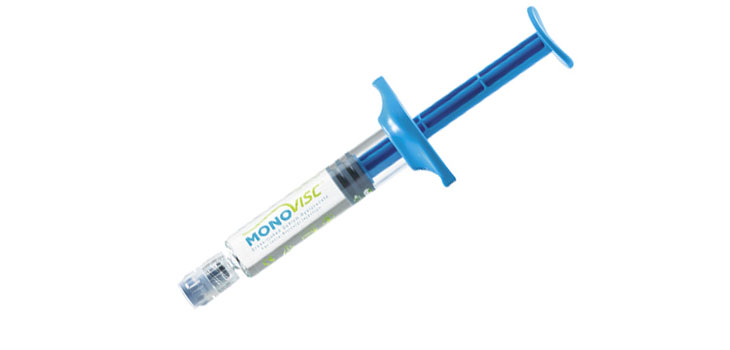
Monovisc is a single injection supplement to the synovial fluid of an osteoarthritic joint, used to treat pain and improve joint mobility in patients suffering from osteoarthritis (OA) of the knee. The product, according to the company, is the first FDA approved single injection product with hyaluronic acid (HA) from a non-animal source. It is comprised of a sterile, clear, biocompatible, resorbable, viscoelastic fluid composed of partially cross-linked sodium hyaluronate (NaHA) in phosphate buffered saline.
FDA approval of the product, according to the company, was based on data from a randomized, controlled, double-blind multi-center pivotal U.S. clinical study encompassing a total of 369 patients at 31 centers in the U.S. and Canada suffering from OA of the knee.
Patients were randomized to either Monovisc or control (saline injection) and were evaluated for improvement in pain as measured by the Western Ontario and McMaster Universities Osteoarthritis Index (WOMAC) at follow-up assessments out to 26 weeks.
The primary effectiveness analysis compared the proportion of Monovisc patients achieving a greater improvement from baseline in WOMAC pain score versus control through 12 weeks. The safety analysis showed Monovisc had an extremely low rate of adverse events. There were no serious adverse events associated with the product.
The Market
Anika has marketed Monovisc internationally since 2008. The product is currently sold in a variety of territories, including Canada, the UK and several countries in the Middle East, Europe and Asia.
When the FDA approved the product, company President and CEO Charles H. Sherwood, Ph.D. said, “The U.S. market for viscosupplementation therapy is experiencing double digit growth annually. We are moving forward rapidly with Mitek Sports Medicine to capitalize on the strengths of our viscosupplementation portfolio.”
Third-quarter total revenue for the company grew 24% to $22.1 million. Sherwood said on October 29, 2014 that Monovisc has been steadily gaining domestic market share since its U.S. commercial launch in the second quarter of 2014. “Monovisc continues to be very well received by the orthopedic physician community and by patients. The improvements we expect as a result of reimbursement and access to formularies for Monovisc should strengthen our U.S. single-injection market position in the quarters ahead.”
Author
React:
Discussion
This is a fascinating development. In my practice we've seen similar outcomes with the revised protocol. The key differentiator seems to be patient selection criteria. Has anyone else noticed the correlation with BMI thresholds?
Great point. I'd push back slightly on the conclusion, the sample size in the cited study is too small to draw population-level inferences. That said, the directional signal is compelling and worth a larger RCT.
We implemented a similar approach last year. Early results are promising but we're still gathering 12-month follow-up data. Happy to share our protocol if anyone is interested.
Join the conversation
Orthopedic professionals are discussing this. Sign in and upgrade to read every comment and add your voice.