
The information about brain-damage among football players grows more and more worrisome. Professor Alon Friedman, M.D., Ph.D., of Ben-Gurion University of the Negev, Israel, has published findings in JAMA Neurology that suggest that up to 40% of football players may suffer from, as yet, unsuspected blood-brain barrier damage. This incidence took place among players who had not reported concussions.
Football Blood-Brain Barrier Damage Alleged
1 min read Premium comments
Secondary
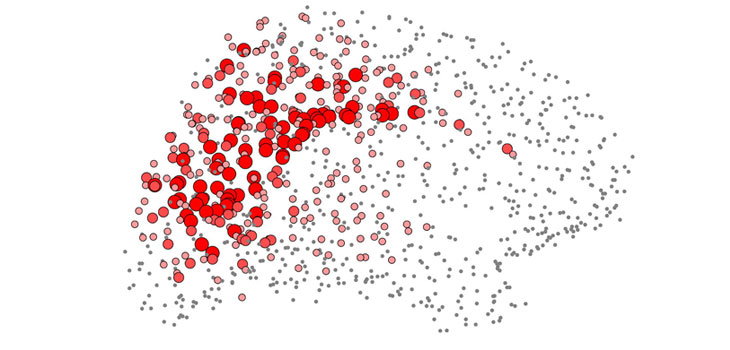
According to a report in Medical News Today, Friedman and his team came to this disturbing conclusion through their work with a new brain imaging method called Dynamic Contrast-Enhanced Magnetic Resonance Imaging (DCE-MRI). This method, they report, highlights brain regions with abnormal vasculature, indicating damage to the blood-brain barrier. The researchers believe that damage to the blood-brain barrier is a cause of brain degeneration and may be a factor in complications with the brain following head injuries.
Friedman’s 40% number came about as a result of testing he conducted on 16 players on Israel’s professional football team. He found that 40% of the players, though they did not report concussions, still had damage to their blood-brain barriers. This compared to only 8.3% of 13 track and field athletes who he also tested.
Writer Honor Whitman quotes Friedman as saying, “The group of 29 volunteers was clearly differentiated into an intact blood-barrier group and a pathological blood-barrier group. This showed a clear association between football and increased risk for blood-brain pathology that we could not see before. In addition, high blood-brain permeability was found in six players and in only one athlete in the control group.” Friedman also suggested that repeated mild concussions may affect some players more than others.
Author
React:
Discussion
This is a fascinating development. In my practice we've seen similar outcomes with the revised protocol. The key differentiator seems to be patient selection criteria. Has anyone else noticed the correlation with BMI thresholds?
Great point. I'd push back slightly on the conclusion, the sample size in the cited study is too small to draw population-level inferences. That said, the directional signal is compelling and worth a larger RCT.
We implemented a similar approach last year. Early results are promising but we're still gathering 12-month follow-up data. Happy to share our protocol if anyone is interested.
Join the conversation
Orthopedic professionals are discussing this. Sign in and upgrade to read every comment and add your voice.