
DePuy Synthes claims it has launched the first arthroscopic hybrid anchor solution for repair of shoulder and hip instability.
DePuy Synthes Claims Stronger Shoulder and Hip Knot
2 min read Premium comments
Secondary
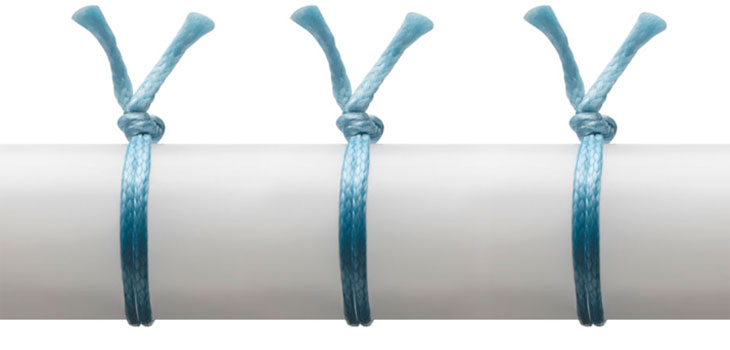
The company says its Gryphon Proknot Anchor “combines the control, strength and consistency of traditional anchors with the low profile repair and ease of use of knotless anchors.” The anchor uses “a proprietary pre-tied sliding knot that forms a construct that, ” according to the company, “is up to 41% stronger than tested arthroscopic knots and knotless devices and up to 64% smaller than standard arthroscopic knots.”
It is also, says the company, “the only suture anchor that, with just one-half hitch, results in a secure knot that allows surgeons to add incremental tension at any point in the repair.”
Incremental Tensioning
Paul Favorito, M.D., an orthopedic surgeon at Wellington Orthopaedic & Sports Medicine in Cincinnati, Ohio, who conducted a study and performed comparative testing on the new technology, said the anchor is, “stronger than any other arthroscopic knot/suture combination we tested and is more reproducible than surgeon-tied arthroscopic knots. This technology also offers incremental tensioning of the knot for a precise repair.”
The anchor is “indicated for use in Bankart and SLAP lesion repair, capsular shift or capsulolabral shoulder reconstruction and hip capsular and acetabular labral repairs. It is available in non-absorbable PEEK (Polyetheretherketone) or proprietary, absorbable BIOCRYL RAPIDE material.”
According to the American Academy of Orthopaedic Surgeons, a “SLAP lesion (superior labrum, anterior [front] to posterior [back]) is a tear of the rim above the middle of the socket that may also involve the biceps tendon. A tear of the rim below the middle of the glenoid socket that also involves the inferior glenohumeral ligament is called a Bankart lesion.”
The shoulder is considered unstable if the tear extends into the biceps tendon or if the tendon is detached. To regain stability, the surgeon will repair and reattach the tendon using absorbable tacks, wires, or sutures.
“Surgeons no longer have to choose between traditional or knotless anchors for instability repair, ” said Mitek Sports Medicine’s Worldwide President, Ian Lawson. He added that the knot “is an important innovation and can make a real difference for surgeons and patients.”
Mitek Sports Medicine is the sports medicine division of DePuy Synthes.
Author
React:
Discussion
This is a fascinating development. In my practice we've seen similar outcomes with the revised protocol. The key differentiator seems to be patient selection criteria. Has anyone else noticed the correlation with BMI thresholds?
Great point. I'd push back slightly on the conclusion, the sample size in the cited study is too small to draw population-level inferences. That said, the directional signal is compelling and worth a larger RCT.
We implemented a similar approach last year. Early results are promising but we're still gathering 12-month follow-up data. Happy to share our protocol if anyone is interested.
Join the conversation
Orthopedic professionals are discussing this. Sign in and upgrade to read every comment and add your voice.