
A Colorado Springs surgeon, Ronald Royce, M.D., working with Front Range Orthopaedics on Briargate Parkway, is one of the first in the nation to offer 3-D printed knee implants to his patients. As described by Stephanie Earls, writing for The Gazette, Royce likens selecting a prosthetic to buying a pair of shoes.
Colorado Surgeon Implants 3-D Printed Knees
1 min read Premium comments
Secondary
She quoted Royce saying, “You go in and have your foot measured and they say, ‘Well, it’s between a size 6 and a size 7, ‘ and they bring a shoe out. Sometimes you get a good fit, but sometimes you don’t get a good fit and it just feels wrong on your foot.”
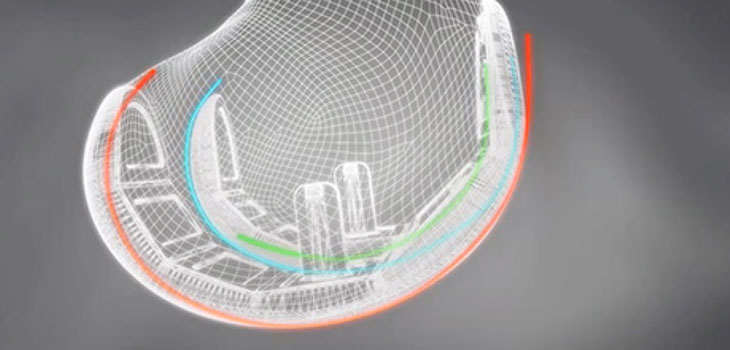
Royce uses computer mapping software to create a digital model of his patient’s knee. 3-D printing makes a precise wax model of the knee and it is this wax model that is used to create the prosthetic. At the same time Royce has a custom jig made that will guide him in positioning the implant during the surgery.
Royce told Earls, “With the old knees, there was no anatomic fit, just sizes. Just measure and hope you’ll get a good fit. This is custom. That quality is what makes this knee so exciting.” Royce performed six surgeries using the 3-D printed implants in the first week of November, according to Earls.
Author
React:
Discussion
This is a fascinating development. In my practice we've seen similar outcomes with the revised protocol. The key differentiator seems to be patient selection criteria. Has anyone else noticed the correlation with BMI thresholds?
Great point. I'd push back slightly on the conclusion, the sample size in the cited study is too small to draw population-level inferences. That said, the directional signal is compelling and worth a larger RCT.
We implemented a similar approach last year. Early results are promising but we're still gathering 12-month follow-up data. Happy to share our protocol if anyone is interested.
Join the conversation
Orthopedic professionals are discussing this. Sign in and upgrade to read every comment and add your voice.