
Three–D printing of medical devices is booming. According to Stacy Lawrence, writing for Fierce Medical Devices, “3-D printing business is growing fast and the providers are a volatile bunch for now.” Stratasys has a new partnership with Worrell.
Worrell Reports 3-D Printing Faster and Cheaper
1 min read Premium comments
Secondary
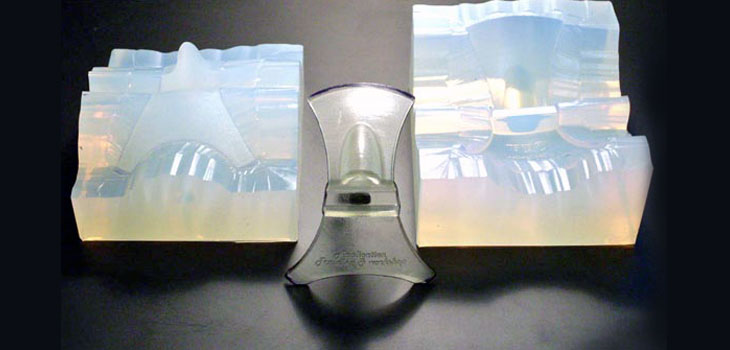
Worrell uses Stratasys’ PolyJet-based 3-D printers to create injection molded medical device prototypes faster and cheaper than can be done in other ways, according to Lawrence. These are adapted and injected with the same materials used in a finished medical device. This process produces injection-molded prototypes using production-quality materials in 95% less time and at 70% less cost than using traditional aluminum molds, she wrote.
Lawrence quotes Nadav Sella, senior manager of manufacturing tools at Stratasys who said, “We have recognized a significant underutilization of the 3-D printed injection molding process in medical device development and we’re working with Worrell to help fill this gap. We want to use this collaboration to demonstrate how medical device manufacturers can bring their products to market significantly faster than ever before.”
Worrell recently engineered a needleless blood collection system to reduce the need for multiple injections. “Using 3-D printed injection molds, we are able to create a prototype for a fraction of the cost and in a matter of days compared to the eight-week lead time associated with traditional tooling processes, ” Worrell CEO Kai Worrell said in a statement.
Medical devices, followed by aerospace, are the largest segments in Stratasy’s Solid Concepts business. Stratasys, which has a market cap of almost $5 billion, acquired Solid Concepts in April for an undisclosed amount.
Author
React:
Discussion
This is a fascinating development. In my practice we've seen similar outcomes with the revised protocol. The key differentiator seems to be patient selection criteria. Has anyone else noticed the correlation with BMI thresholds?
Great point. I'd push back slightly on the conclusion, the sample size in the cited study is too small to draw population-level inferences. That said, the directional signal is compelling and worth a larger RCT.
We implemented a similar approach last year. Early results are promising but we're still gathering 12-month follow-up data. Happy to share our protocol if anyone is interested.
Join the conversation
Orthopedic professionals are discussing this. Sign in and upgrade to read every comment and add your voice.