
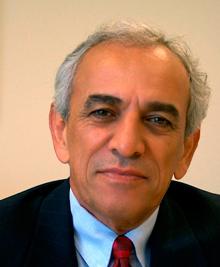
Mitchell Seyedin, Ph.D., one of the pioneers in regenerative medicine for orthopedics and, most recently, Chief Scientific Officer and Executive Chairman of ISTO Technologies, Inc., passed away on October 8, 2014 after a long battle with pancreatic cancer.
In Memoriam: Mitch Seyedin, Ph.D.
2 min read Premium comments
Remembrances
His infectious enthusiasm for the science of regenerative medicine inspired thousands of physicians and orthopedic executives to join him in the great march to regenerative healing and in many ways fueled the development of this entire industry.
Mitch Seyedin’s passing leaves a large hole. His colleagues and business partners, all of whom he considered to be his friends, will miss his 1000 watt smile and the pure energy and passion he brought to building a brighter, better future for us all.
Dr. Seyedin is survived by his wife, Sara, and two children, Melissa and Steven.
Dr. Seyedin received an undergraduate degree in chemistry from the University of Wisconsin, River Falls, and a Ph.D. in biological chemistry from the University of South Carolina, Columbia. He was also a Postdoctoral Research Fellow at the University of California, Berkeley.
Mitch Seyedin was an innovator in the truest sense of that word. Prior to leading ISTO, he was co-founder, president and chief executive officer of CBYON, a medical technology company that develops and markets advanced visualization and navigation systems for minimally invasive surgery.
Before that he founded Orquest, Inc., a bone and cartilage tissue engineering company that is now a key part of the DePuy unit of Johnson & Johnson. Dr. Seyedin was president and chief executive officer until 1996, and chairman and chief scientific officer until 1999. Earlier in his career, Dr. Seyedin co-founded Metra Biosystems, Inc., a diagnostic company that went public in 1995 and was acquired by Quidel in 1999.
Mitch rose to national prominence early in his career when he served as director of the Cellular Biochemistry Department at Collagen Corporation, where he was responsible for all aspects of tissue engineering and growth factor research programs and was awarded 11 patents.
Scott Gill of ISTO Technologies noted, “Mitch was passionate about everything he did and his enthusiasm about work and life was contagious. You could spend five minutes speaking with him about something that he believed in and you would leave the conversation fully convinced that he would make it happen through creativity and determination. He balanced his exceptionally strong scientific mind with a keen sense for business but also a true compassion for the well-being of those that worked for and with him. Anyone that had the pleasure of knowing him or working with him is better off for that experience.”
Joseph Lane, M.D. of Hospital for Special Surgery said, “I remember Mitch when he was a recent Ph.D. graduate. He was working at Collagen Corporation and pretty much single handedly developed Collagraft. He was an extraordinary investigator and his skills and determination have been evident throughout his illustrious career. It is an honor and a pleasure to have been friends with Mitch.”
Donations are requested to be sent to the Mitchell Saeid Seyedin Pancreatic Cancer Fund.
React:
Discussion
This is a fascinating development. In my practice we've seen similar outcomes with the revised protocol. The key differentiator seems to be patient selection criteria. Has anyone else noticed the correlation with BMI thresholds?
Great point. I'd push back slightly on the conclusion, the sample size in the cited study is too small to draw population-level inferences. That said, the directional signal is compelling and worth a larger RCT.
We implemented a similar approach last year. Early results are promising but we're still gathering 12-month follow-up data. Happy to share our protocol if anyone is interested.
Join the conversation
Orthopedic professionals are discussing this. Sign in and upgrade to read every comment and add your voice.