
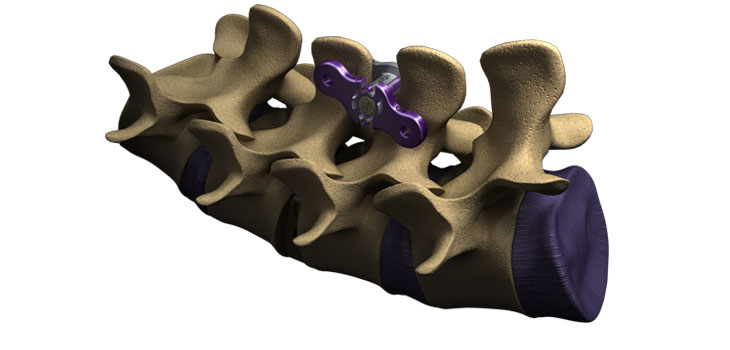
Doctors in Israel have performed their first surgical implant of Aurora Spine’s Zip Ultra Minimally Invasive interspinous device. Professor Reuven Gepstein of the Herzliya Medical Center performed the surgery under local anesthesia.
Aurora Spine Device Invades Israel
1 min read Premium comments
Secondary
“The Zip Ultra Mis fusion system is a very intuitive and easy to use system that allows me to perform a short and safe surgery while avoiding the risk of nerve impact, ” said Gepstein. “The surgery was quick with minimal pain and the patient’s recovery time is expected to be extremely rapid.”
“We are very excited that Aurora now offers our Zip Mis system portfolio in Israel, ” said Trent Northcutt, President and Chief Executive Officer of Aurora Spine. “We believe that the fusion system will change spine surgery with a true minimally invasive approach designed to achieve reproducible, superior patient outcomes.”
Aurora Spine’s interspinous fixation implant for spinal fusion consists of a one-step locking mechanism, articulating spikes and various sizes to accommodate variations in patient anatomy which, company officials say, eliminates the use of a set screw.
Author
React:
Discussion
This is a fascinating development. In my practice we've seen similar outcomes with the revised protocol. The key differentiator seems to be patient selection criteria. Has anyone else noticed the correlation with BMI thresholds?
Great point. I'd push back slightly on the conclusion, the sample size in the cited study is too small to draw population-level inferences. That said, the directional signal is compelling and worth a larger RCT.
We implemented a similar approach last year. Early results are promising but we're still gathering 12-month follow-up data. Happy to share our protocol if anyone is interested.
Join the conversation
Orthopedic professionals are discussing this. Sign in and upgrade to read every comment and add your voice.