
Zimmer Spine is on a roll.
A First With Zimmer Cervical Plate Clearance
2 min read Premium comments
Secondary
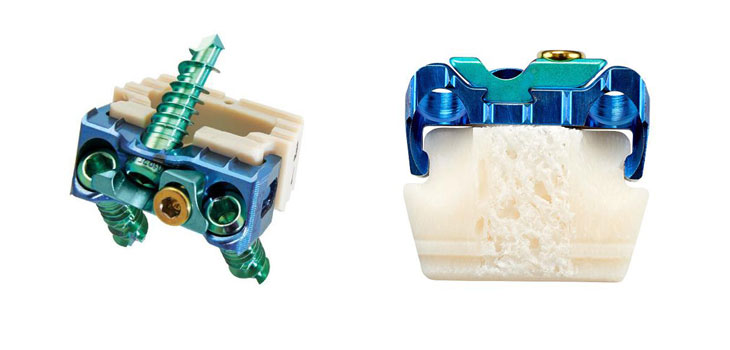
After a 6% rise in sales for the third quarter, the company announced on November 10, 2014, the FDA 510(k) clearance of its Optio-C Anterior Cervical Plate for use with structural allograft/autograft as a stand-alone cervical system for cervical fusion procedures.
Structural Allograft/Autograft or PEEK
Steve Healy, the president of Zimmer Spine, said this is the industry’s first no profile stand-alone device with structural allograft/autograft in one modular system. “In follow up to the PEEK option we launched earlier this year, we have expanded the Optio-C System to include multiple materials. Surgeons now have a choice to use structural allograft/autograft or PEEK in their stand-alone ACDF (anterior cervical discectomy and fusion) procedures.”
The Optio-C system is comprised of one anterior cervical plate, three bone screws and either a PEEK IBFD or structural allograft/autograft. The device is secured by an anti-migration system that is designed to maintain no profile. The system is also designed to maximize fusion with a unique load-sharing interface and multiple implant footprints.
Benefits
Because it has no profile, the company says soft tissue irritation is reduced for less invasive ACDF procedures, and it eliminates the need for additional plating when addressing adjacent level disease. “With plate strength equivalent to a traditional cervical plate with no profile, stability through a three-screw fixation design, the Optio-C System takes cervical stand-alone devices to the next level, ” said the company statement.
12 New Products in 2014
The company says it has launched 12 new products since January including the Virage OCT Spinal Fixation System, a posterior system intended for the Occipital-Cervical-Thoracic spine (Occiput-T3), and the Optio-C Anterior Cervical System, a next generation modular stand-alone cervical device. Other new products include six new biologics lines, the TriCor Sacroiliac Joint Fusion System, the Ancora Lateral Interbody System, the UniLink and UniLink 5/1 Interspinous Fusion System, the Zimmer Facet Screw System and the Zimmer Anterior Buttress Plate System.
Healy said the new products are a combination of internal development and external licensing and distribution programs. “Over the next 12 to 24 months, we will continue to launch products we believe will advance spine surgery and provide surgeons with solutions for each patient’s unique and ongoing needs.”
Gaining Confidence
BMO Capital Market analyst Joanne Wuensch said the third quarter spine sales exceeded expectations with the second quarter launch of the company’s Virage system, helping to penetrate customer accounts. “The Zimmer spine team has been working for several years to get a deformity and posterior fixation system to market, and management is gaining confidence in their execution.”
With Medtronic, Inc. once again absent from the annual NASS (North American Spine Society) meeting, Zimmer Spine may get some extra looks from surgeons.
Author
React:
Discussion
This is a fascinating development. In my practice we've seen similar outcomes with the revised protocol. The key differentiator seems to be patient selection criteria. Has anyone else noticed the correlation with BMI thresholds?
Great point. I'd push back slightly on the conclusion, the sample size in the cited study is too small to draw population-level inferences. That said, the directional signal is compelling and worth a larger RCT.
We implemented a similar approach last year. Early results are promising but we're still gathering 12-month follow-up data. Happy to share our protocol if anyone is interested.
Join the conversation
Orthopedic professionals are discussing this. Sign in and upgrade to read every comment and add your voice.