
The National Aeronautics and Space Administration (NASA) and a company providing bone and soft tissue allografts for use in surgical procedures would seem to be strange–if not incompatible—bedfellows. But that is not the case.
NASA and AlloSource Partner for Microbe Study
2 min read Premium comments
Secondary

Thanks to match-making by the Colorado Association for Manufacturing and Technology (CAMT)—now called Manufacturer’s Edge—AlloSource and NASA have become partners. AlloSource, one of the nation’s largest providers of skin, bone and soft tissue allografts for use in surgical procedures, will leverage technologies developed by NASA for assembly and launch operations of various Mars missions—specifically focused on rapid molecular microbial burden measurement and genetic inventory cataloging.
“Working with NASA and the Jet Propulsion Laboratory (JPL) is an amazing achievement for AlloSource and we are grateful for Manufacturer’s Edge’s assistance in facilitating this relationship, ” said Thomas Cycyota, AlloSource president and CEO. “We are committed to researching and developing new processes that allow us to continue to maximize the gift of human tissue donation.”
As AlloSource officials explain, in order for tissue to be safe and suitable for transplant, company technicians conduct a program of intense, specialized scientific testing. Tissue is subjected to microbiological testing at recovery and must be free of specific microorganisms and contaminants that would preclude tissue from processing or transplantation. They also conduct additional post-processing testing before the tissue is transplantable. This is similar to what NASA and JPL will also do.
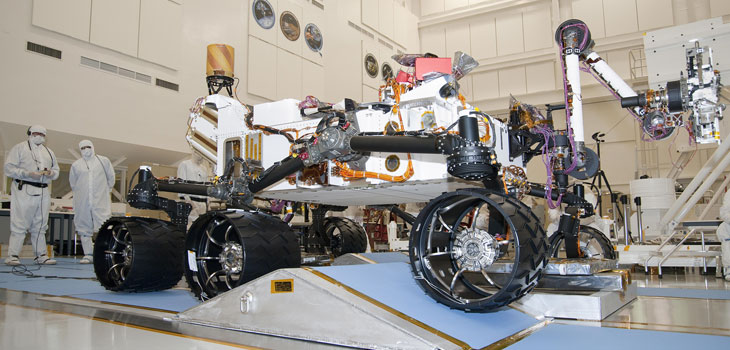
JPL is a division of the California Institute of Technology, and is also the NASA center that manages the Curiosity Rover mission. The work focuses on assessing a local region on the surface of Mars that could be a potential habitat for past life. The partnership will enable NASA, JPL and AlloSource to share ideas and processes related to microbiological testing methods and they will look for new ways to rapidly detect the presence of microorganisms.
The molecular microbial detection technology used in the rigorous pre- and post-mission testing of the Mars mission spacecraft components provides an opportunity for AlloSource to evolve its own microbial testing.
“This creative collaboration shows the value of connecting NASA’s cutting-edge space program technology with AlloSource’s tissue testing methods. We are delighted to help AlloSource connect with NASA and JPL and improve lives in this way, ” said Tom Bugnitz, CEO of Manufacturer’s Edge (formerly CAMT).
Author
React:
Discussion
This is a fascinating development. In my practice we've seen similar outcomes with the revised protocol. The key differentiator seems to be patient selection criteria. Has anyone else noticed the correlation with BMI thresholds?
Great point. I'd push back slightly on the conclusion, the sample size in the cited study is too small to draw population-level inferences. That said, the directional signal is compelling and worth a larger RCT.
We implemented a similar approach last year. Early results are promising but we're still gathering 12-month follow-up data. Happy to share our protocol if anyone is interested.
Join the conversation
Orthopedic professionals are discussing this. Sign in and upgrade to read every comment and add your voice.