
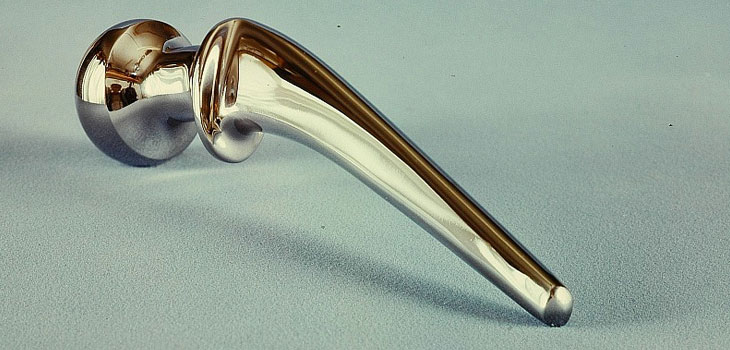
The U.S. market for joint replacements will grow to approximately $5 billion by the year 2020, according to iData Research, a global authority in the medical device market. The writers of the report state that growth will come from the increased number of younger patients who received joint replacements in the past two decades. Researchers anticipate that these younger patients will be receiving hip and knee revision surgeries as their old implants begin to fail.
Joint Market to Reach $5 Billion
1 min read Premium comments
Secondary
Kamra Zamanian, M.D. and CEO of iData said “Since the high profile failure of some metal on metal, newer introductions have been heavily scrutinized in the medical and political industry.” This situation led the Food and Drug Administration to initiate a study of the usefulness and safety of five new implants. According to a PR WEB report, a research team led by Art Sedrakyan, Associate Professor at Weill Cornell Medical College in New York concluded that no convincing evidence supported the use of the newer devices.
While the increase in younger patients drove the market for longer-wearing ceramic-on-ceramic devices, later concerns about squeaking noises and the increased rate of implant fractures limited market growth, according to a writer for PR WEB. The writer anticipates that the metal on polyethylene and ceramic on polyethylene implants will lead market growth through 2020.
Author
React:
Discussion
This is a fascinating development. In my practice we've seen similar outcomes with the revised protocol. The key differentiator seems to be patient selection criteria. Has anyone else noticed the correlation with BMI thresholds?
Great point. I'd push back slightly on the conclusion, the sample size in the cited study is too small to draw population-level inferences. That said, the directional signal is compelling and worth a larger RCT.
We implemented a similar approach last year. Early results are promising but we're still gathering 12-month follow-up data. Happy to share our protocol if anyone is interested.
Join the conversation
Orthopedic professionals are discussing this. Sign in and upgrade to read every comment and add your voice.