
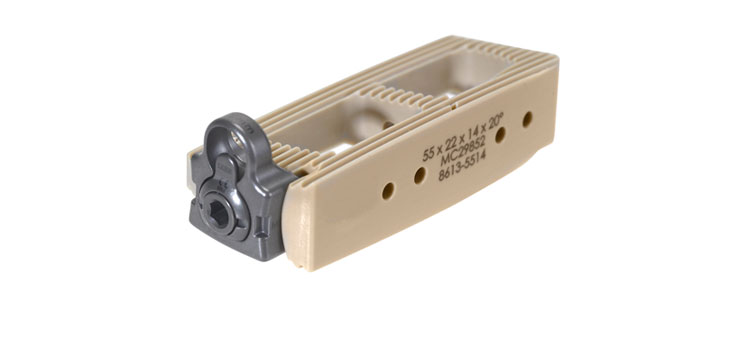
Biomet, Inc., through its 2013 acquisition of Lanx, Inc., received the first FDA 510(k) clearance for a modular plating and hyperlordotic spacer system designed to help facilitate acute sagittal correction via the lateral approach when used in conjunction with supplemental fixation.
First Surgery Using Biomet’s Hyperlordotic Lateral Fusion System
1 min read Premium comments
Secondary
On October 21, 2014, the company announced that the first surgery using the system.
Paul Holman, M.D., used Biomet’s Timberline Modular Plate Fixation (MPF) Hyperlordotic Lateral Fusion System on a patient at the Houston Methodist Spine Center.
Dr. Holman said the system is a “fantastic addition to Biomet’s Modular Plate Fixation System, allowing surgeons to achieve excellent sagittal balance restoration via a minimally invasive approach in adult deformity applications. Biomet’s new system also provides instrumentation to release the anterior longitudinal ligament, which facilitates increased segmental lordosis.”
Biomet’s General Manager of Global Spine Jim Cloar said lateral access surgery is changing the landscape of deformity treatment options. He added that the system “has the potential to allow more surgeons to treat difficult pathology in a less invasive manner and to offer a more cost effective solution. The ability for a surgeon to make intraoperative decisions regarding spacer and fixation needs, and assemble the construct in situ when needed, is a distinct advantage over other available solutions.”
According to the company announcement, the Timberline system features three different screw plate solutions that can be attached to a variety of lateral intervertebral spacers, including the newly cleared hyperlordotic spacer. The system also features 20° & 30° lordotic spacers in a 22mm wide footprint.
Author
React:
Discussion
This is a fascinating development. In my practice we've seen similar outcomes with the revised protocol. The key differentiator seems to be patient selection criteria. Has anyone else noticed the correlation with BMI thresholds?
Great point. I'd push back slightly on the conclusion, the sample size in the cited study is too small to draw population-level inferences. That said, the directional signal is compelling and worth a larger RCT.
We implemented a similar approach last year. Early results are promising but we're still gathering 12-month follow-up data. Happy to share our protocol if anyone is interested.
Join the conversation
Orthopedic professionals are discussing this. Sign in and upgrade to read every comment and add your voice.