
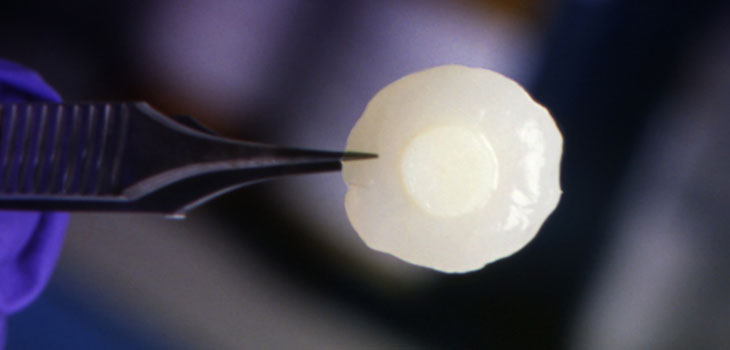
Histogenics Corporation, a regenerative medicine company, and Intrexon Corporation, a developer of synthetic biology, have formed an Exclusive Channel of Collaboration (ECC) to develop allogeneic chondrocyte cell therapeutics to repair damaged articular hyaline cartilage in humans.
Cartilage Cure Goal of Landmark Alliance
2 min read Premium comments
Secondary
Per the press release, “Cartilage damage is a common problem in the U.S. and can be caused by acute or repetitive trauma. Unlike bone and other self-repairing tissues, joint cartilage does not heal on its own. As a result, it is challenging to restore full tissue function once an injury occurs, and progressive loss of cartilage tissue can lead to osteoarthritis.”
“In spite of the limitations of existing approaches to treatment, doctors perform an estimated 500, 000 cartilage repair procedures in the U.S. annually, ” according to the press release. Through the ECC, Histogenics plans to employ its expertise in novel solutions for musculoskeletal-related conditions, and Intrexon will utilize its integrated technologies to develop what the two companies project will be a universal allogeneic cell treatment for cartilage repair.
“We are pleased to enter into this strategic partnership and are excited by the opportunity to couple Intrexon’s expertise in synthetic biology with our proficiency in cell processing, scaffolding and tissue engineering, ” said Histogenics CEO and President Adam Gridley. “We expect this collaboration will play an important role in advancing scientific innovation in tissue injuries such as cartilage damage.”
Senior Vice President and Head of Intrexon’s Health Sector Gregory Frost, Ph.D. said, “We are pleased to be partnering with the team at Histogenics for both their extensive experience in tissue engineering and focus on patients with damaged cartilage. This collaboration will utilize our suite of immunologic engineering tools to develop a universal donor chondrocyte that has the potential to revolutionize cartilage repair.”
Under the terms of the agreement, Histogenics will have access to Intrexon’s technologies and expertise to develop allogeneic genetically modified chondrocyte cell therapeutics in exchange for a technology access fee of $10 million in the form of a convertible promissory note.
Histogenics will reimburse Intrexon for half of the research and development costs, and the remainder after regulatory filing acceptance. The agreement also provides for commercial and regulatory milestone payments to Intrexon of up to $34.5 million, as well as a low double-digit percentage royalty based on the gross profits from collaboration products. Intrexon will also be granted the right to invest up to $15 million in Histogenics.
Author
React:
Discussion
This is a fascinating development. In my practice we've seen similar outcomes with the revised protocol. The key differentiator seems to be patient selection criteria. Has anyone else noticed the correlation with BMI thresholds?
Great point. I'd push back slightly on the conclusion, the sample size in the cited study is too small to draw population-level inferences. That said, the directional signal is compelling and worth a larger RCT.
We implemented a similar approach last year. Early results are promising but we're still gathering 12-month follow-up data. Happy to share our protocol if anyone is interested.
Join the conversation
Orthopedic professionals are discussing this. Sign in and upgrade to read every comment and add your voice.