
Which Tommy John Surgery Is Best? Answer: Neither!
Which Tommy John Techniques Are Best? (trick question) // Surprising Study: 3D Imaging Only Slightly Better Than 2D // and More!
5 min read Premium comments
It’s a first-in-the-literature…Jim Bradley, M.D., M.S., a sports medicine specialist with Burke & Bradley Orthopedics at the University of Pittsburgh Medical Center and lead physician for the Pittsburgh Steelers, has conducted a head-to-head trial of two types of Tommy John procedures. Dr. Bradley tells OTW, “We conducted a prospective randomized clinical trial comparing a modified Jobe technique (as taught to me by Frank Jobe), to the docking technique that was developed by David Altchek. We had an equal number of baseball players in each group—88% docking procedure and 84% of those who had the modified Jobe returned to play at the same level. All baseball players had complete tears of their UCL [ulnar collateral ligament] and no prior surgeries on the ipsilateral shoulder or elbow.”
“This study, which was conducted with high school and college baseball players, is the first one in the literature to prospectively compare the modified Jobe versus a docking technique by one surgeon, one institution, and one rehab protocol. While the majority of players did well, there was a 12-16% failure rate, which is consistent with the literature. Most lay people think that when someone undergoes a Tommy John procedure they come back better and stronger, something which has been proven untrue by multiple studies. When treating a patient with a partial ulnar collateral ligament tear I often hear, ‘Why don’t you just fix the arm so that it will be stronger?’ Well, it’s because it won’t necessarily be stronger!”
“It should be noted that there are different scales used to measure an athletes’ ability to return to play. There is the Conway scale, the Andrews-Timmerman score, the Kerlan-Jobe Orthopaedic Clinic score, and the American Shoulder and Elbow Surgeons score. For this study we used the Conway score because it is very specific to overhead athletes.”
“At present we are building up our numbers. I do approximately 30 such surgeries annually, so it takes a while to attain higher numbers. Our goal is to have 30 enrollees in each group.”
Moving From 2D to 3D Imaging Only Marginally Useful
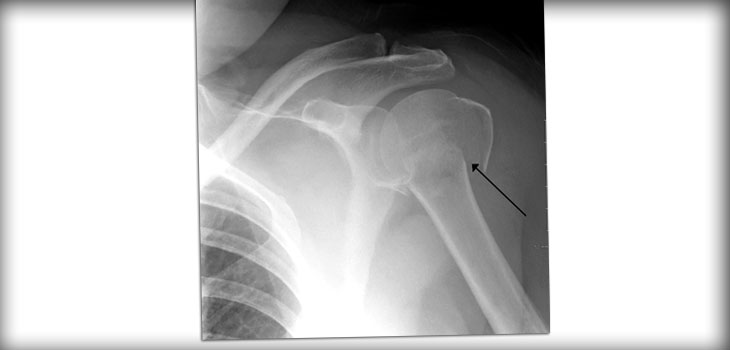
Does using a three dimensional CT scan mean that surgeons will rank high on inter-observer and intra-observer reliability? Not likely, says a new study. Marschall B. Berkes, M.D., attending surgeon at Landstuhl Regional Medical Centertells OTW, “Given the increased use of 3D CT scans to evaluate proximal humerus fractures, my mentors, colleagues and I wanted to see if 3D reconstructions would have an impact on classifying proximal humerus fractures with regards to increasing agreement between surgeons or improving a surgeon’s reproducibility, compared to conventional multiplanar 2D CT or X-ray. We also wanted to know if clinical experience had an impact, since at our institutions we have a broad range of physicians (from junior residents all the way up to very experienced trauma trained orthopaedic surgeons) interpreting these images.”
“Each fracture was classified according to the AO/OTA (Arbeitsgemeinschaft für Osteosynthesefragen/Orthopaedic Trauma Association) and Neer classifications. Two trauma surgeons, one shoulder surgeon, two senior orthopaedic residents, and two junior orthopaedic residents were charged with reviewing the radiographs and two and three-dimensional computed tomography scans of forty proximal humerus fractures.”
“We found that 3D CT essentially only showed improved inter-observer and intra-observer agreement with regard to classification and treatment of proximal humerus fractures amongst junior residents. I was a little surprised by this. No such effect was seen in those with more clinical experience. I suppose that this may be a function of lack of experience with translating 2D pictures into a three dimensional problem, and the 3D reconstruction may help to compensate for that lack of experience by having a computer translate that two dimensional data directly.”
“The biggest challenge was the scale of the project. We had many individuals reviewing hundreds of cases multiple times in order to get the data we needed to make this a valid and useful investigation.”
“All that we can conclude from this study is that 3D CT didn’t dramatically improve intra-observer reproducibility or inter-observer agreement with regards to the Neer and AO/OTA classification, or treatment recommendation of proximal humerus fractures (except perhaps among those with less experience). “
“This is probably more a function of the nature of the fracture classifications themselves. It is not always black and white—what one may consider a three part fracture, another surgeon would call a four part fracture. And that probably won’t change if you looked a plain X-ray, a 2D or 3D CT scan, an MRI, etc. Thus, I would caution readers to remember what this study is, or perhaps more importantly, what it is NOT saying.”
“The conclusion is not that 3D CT is not clinically useful. Instead, the core message is that 3D CT does not necessarily make data interpretation (i.e., proximal humerus fracture classification or treatment recommendation) more consistent, from a statistical standpoint. In the end, when an orthopaedic surgeon is taking care of a patient, he or she needs to use the best diagnostic tools in his or her hands to provide the best possible care for that patient, and that is still an individual process that is difficult to apply and analyze on a broad scale.”
RSA in Morbidly Obese Safe, But More Expensive
With obesity not going away any time soon, it is important to get a handle on what consequences this will have on the healthcare system. Mark Frankle, M.D., a shoulder specialist at the Florida Orthopaedic Institute and researcher with the Foundation for Orthopaedic Research and Education (FORE), decided to investigate. He tells OTW, “My colleagues and I had a sense that our morbidly obese patients have fared well overall when it comes to primary reverse shoulder arthroplasty, but we wanted to verify this. We studied 21 patients from our joint registry who met the World Health Organization definition for obese, namely, a body mass index (BMI) of more than 40. We also had a control group of 36 patients with a BMI of less than 30. We powered the study such that there were three control patients matched to each obese patient (matched for age and sex).”
“We found that morbidly obese patients had similar improvements in functional outcomes (as measured by the American Shoulder and Elbow Surgeons score) as compared with nonobese patients. They also had similar improvements in functional improvements in shoulder motion. On the downside, they had more total comorbidities than nonobese patients and they were in the OR 13 minutes longer. This extension in surgical time, coupled with the fact that morbidly obese patients had a sixfold higher rate of discharge to rehabilitation facilities rather than to home, means that treating these patients is very costly. In fact, hospital costs were $2, 974 higher for those who were morbidly obese.”
“The cost of care and value issues are only getting more important. And my colleagues who are considering bundled payment arrangements may not understand when negotiating what resources they will need in order to effectively treat such a medical comorbidity. It is evident that morbidly obese patients cost more to manage, meaning that the value of care is reduced. When we are trying to determine how to provide care and we need to do it in a context of limited resources then we have a real conundrum. How do we make effective, ethical decisions?”
“This work also sheds light on an immense problem we have with clinical studies in the healthcare system—loss to follow-up. Some institutions manage to contend with it better than others, but I’m not sure how they do this. And it has not been addressed in all the discussion of healthcare reform. I’m open to hearing from my colleagues on this topic.”
For those wishing to contact Dr. Frankle, he may be reached at: mfrankle@floridaortho.com.
Author
React:
Discussion
This is a fascinating development. In my practice we've seen similar outcomes with the revised protocol. The key differentiator seems to be patient selection criteria. Has anyone else noticed the correlation with BMI thresholds?
Great point. I'd push back slightly on the conclusion, the sample size in the cited study is too small to draw population-level inferences. That said, the directional signal is compelling and worth a larger RCT.
We implemented a similar approach last year. Early results are promising but we're still gathering 12-month follow-up data. Happy to share our protocol if anyone is interested.
Join the conversation
Orthopedic professionals are discussing this. Sign in and upgrade to read every comment and add your voice.