
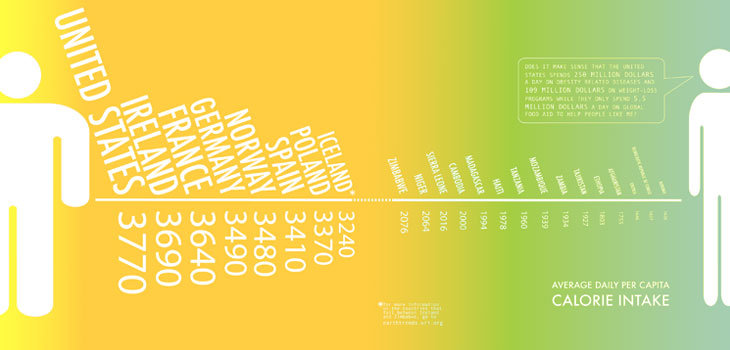
The United States, already the most obese nation in the world, is fatter now than it has ever been. That is the disturbing word from Katie Sullivan, commenting on reports from the Robert Woods Johnson Foundation and the Trust for America’s Health. The states of Mississippi and West Virginia are in a tie for the fattest states in the union. Both have an obesity rate higher than 35%.
U.S. #1! In Obesity Rates…
1 min read Premium comments
Secondary
Arkansas, with a rate of 34.6% is not far behind with Tennessee, Kentucky, Louisiana and Oklahoma coming up with rates in the lower 30 percentages. The skinniest state is Colorado with a 21.3% obesity rate. More than 65% of adults and almost 32% of children are overweight. Healthcare professionals, who should know better, have an obesity rate of nearly 35% which is higher than the national average. Joining healthcare professionals in the fat category are bureaucrats and law enforcement officials.
The situation is worse for minorities. Nearly 48% of black and 42.5% of Latinos are obese while 32.6% of white Americans weigh in as obese. Only Asian-Americans escape: just 10.8% are overweight. Education appears to make a difference. High school graduates weigh less than those who did not complete high school and college graduates are thinner than those whose formal education ended with high school graduation.
The fearful fact is that obesity rates have more than doubled in the past 35 years. The average American now weighs 24 pounds more than he would have weighed in 1960.
Author
React:
Discussion
This is a fascinating development. In my practice we've seen similar outcomes with the revised protocol. The key differentiator seems to be patient selection criteria. Has anyone else noticed the correlation with BMI thresholds?
Great point. I'd push back slightly on the conclusion, the sample size in the cited study is too small to draw population-level inferences. That said, the directional signal is compelling and worth a larger RCT.
We implemented a similar approach last year. Early results are promising but we're still gathering 12-month follow-up data. Happy to share our protocol if anyone is interested.
Join the conversation
Orthopedic professionals are discussing this. Sign in and upgrade to read every comment and add your voice.