
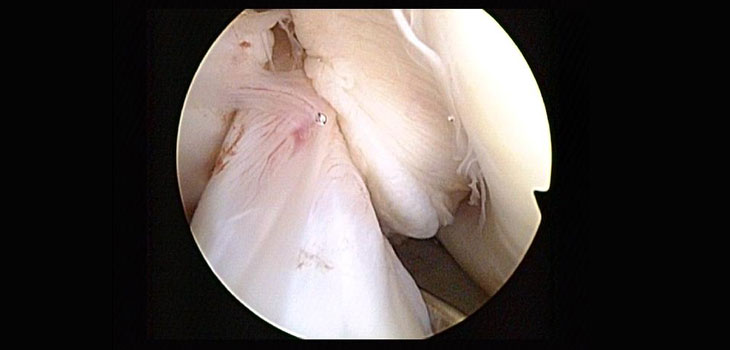
A torn anterior cruciate ligament (ACL)…to operate or not? Knowledge is lacking, say the authors of a recently published article, about the clinical course of nonoperative treatment of an ACL tear. The study, conducted by Grindem et al. from the Norwegian Research Center for Active Rehabilitation in Oslo, Norway, has just been published in The Journal of Bone and Joint Surgery (JBJS).
Torn ACL: Hit the OR or Play it Safe?
1 min read Premium comments
Secondary
This was a cohort study that included 143 patients who were treated operatively and nonoperatively; each participant was measured for isokinetic knee extension and flexion strength and patient-reported knee function were recorded at baseline, six weeks, and two years. The authors found that the 100 patients who chose to undergo surgery were younger and were those who wanted to participate in Level-I sports1. Those treated nonoperatively were found to return to level-II2 sports in the first year much more quickly and in the second year were more likely to return to level-III3 sports than their surgically treated counterparts.
Regardless if a patient appeared on the OR table or not, the results were roughly the same, say the study’s authors. They point to the fact for many patients, neither course of treatment resulted in a full recovery; the authors intend to focus future efforts on improving outcomes for these patients.
Marc Swiontkowski, M.D., Editor-in-Chief of JBJS, commented to OTW, “Patients consider their future desires in terms of sport related demand on their knee as a major component in their decision making in regards to the option of undergoing ACL reconstruction. The functional demand does relate to the future risk of a meniscal tear and many patients prefer to forego future high pivoting and twisting activities rather than undergo surgery.”
1 handball, soccer, basketball, floorball
2 volleyball, martial arts, gymnastics, ice hockey, tennis/squash, alpine/telemark skiing, snowboarding, dancing/aerobics
3 cross country skiing, running, cycling, swimming, strength training
Reference: Hefti et al. 1993
Author
React:
Discussion
This is a fascinating development. In my practice we've seen similar outcomes with the revised protocol. The key differentiator seems to be patient selection criteria. Has anyone else noticed the correlation with BMI thresholds?
Great point. I'd push back slightly on the conclusion, the sample size in the cited study is too small to draw population-level inferences. That said, the directional signal is compelling and worth a larger RCT.
We implemented a similar approach last year. Early results are promising but we're still gathering 12-month follow-up data. Happy to share our protocol if anyone is interested.
Join the conversation
Orthopedic professionals are discussing this. Sign in and upgrade to read every comment and add your voice.