
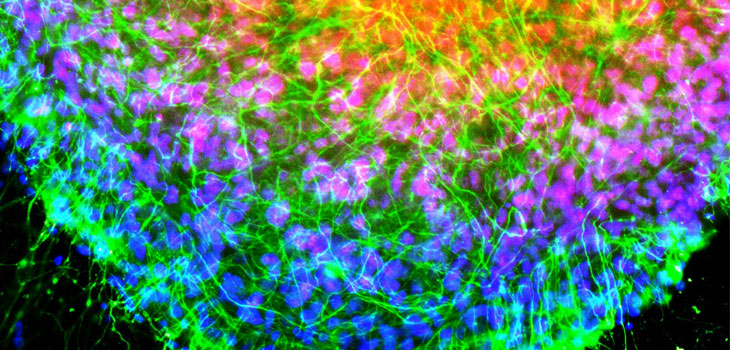
In what could be called a genuine “breakthrough, ” scientists at the Medical Research Council at the University of Edinburgh, Scotland, have produced the seed cells of the human spinal cord in a petri dish. They did it by mimicking the natural development of the spinal cord in the human embryo. During embryo growth the spinal cord forms from a group of cells called neuro-mesodermal progenitors (NMPs).
Spinal Cord Cells Created In Petri Dish
1 min read Premium comments
Secondary
As Charlie Cooper, writing for the Independent explained, by analyzing and copying the series of chemical signals which take place in a growing embryo, they were able to make the ordinary stem cells of humans first transform into NMPs, and then into spinal cord stem cells.
“There have been some great advances in the field of stem cell research in recent years, with scientists being able to grow liver, heart and even some brain tissue in the lab. The spinal cord, however, has remained elusive because the NMP cells have largely been overlooked, ” said James Briscoe, M.D., who co-led the research.
“We can’t yet produce the tissues themselves, but this a really big step. It’s like being able to make the bricks and raw materials but not yet build the house, ” he said.
According to Cooper, this is the first time NMPs have been created from stem cells. He says that the scientists hope that stem cells transformed through this natural development process will bear closer resemblance to those that occur naturally in the body—helping cells which might be used in transplants to better integrate with the body.
Author
React:
Discussion
This is a fascinating development. In my practice we've seen similar outcomes with the revised protocol. The key differentiator seems to be patient selection criteria. Has anyone else noticed the correlation with BMI thresholds?
Great point. I'd push back slightly on the conclusion, the sample size in the cited study is too small to draw population-level inferences. That said, the directional signal is compelling and worth a larger RCT.
We implemented a similar approach last year. Early results are promising but we're still gathering 12-month follow-up data. Happy to share our protocol if anyone is interested.
Join the conversation
Orthopedic professionals are discussing this. Sign in and upgrade to read every comment and add your voice.