
A new study by university researchers in the United Kingdom has identified a computerized system that will improve the success of knee revision surgeries and perhaps even help to prevent them.
Radiolucency Yields to Computers
2 min read Premium comments
Secondary
The underlying problem it addresses is osteoarthritis, the degeneration of joint cartilage and bone—the world’s most common musculoskeletal disease. The World Health Organization predicts that by 2020 osteoarthritis will be the world’s fourth leading cause of disability, affecting double the number of patients who have cardiac disease.
Surgeons in the UK perform about 90, 000 knee replacements annually. That figure is expected to rise by more than 600% by 2030, because of an aging population, increased obesity and the fact that patients are getting younger. If a knee replacement lasts 10 to 15 years, a young patient may need one or two revision surgeries during his lifetime. Revision knee replacements can cost up to four times the amount of the original surgery, report the researchers.
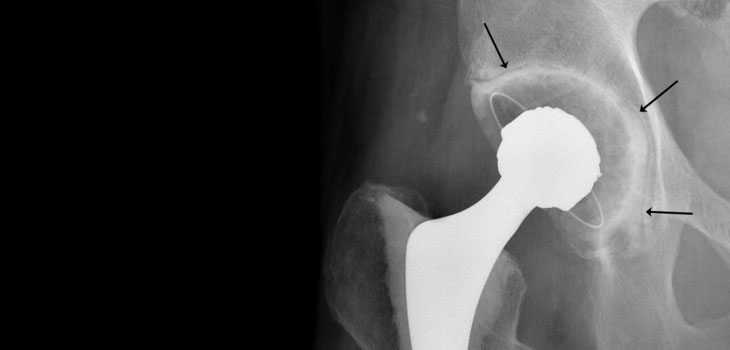
Enter the results of the study. Radiolucency is the name of a region surrounding a hip or knee replacement which shows up dark on an X-ray. If it darkens over time that may indicate that the implant is loosening and may need to be removed and replaced. In current clinical practice orthopedic surgeons look at the radiolucency and try to come to a reasonable conclusion.
The good news is that researchers have developed a semi-automated computer program which provides an independent, more reliable radiolucency score than the present subjective surgeons’ assessments. The study, published in Interface, analyzed six surgeons’ assessment of radiolucency in 38 unicompartmental knee replacement radiographs. They then compared the results with assessments made by a semi-automated imaging algorithm.
The results? There was wide variation among the surgeon results with total agreement in fewer than 10% of zones. The automated program had total agreement in 81.6% of zones—demonstrating a far more accurate and reliable means of diagnosing radiolucency.
“Surgeons are given limited guidance on how to define radiolucency and use different assessment criteria which explains the wide and concerning variation found in the surgical assessments in this study, ” commented Richie Gill, BEng, DPhil, FIPEM, professor of Healthcare Engineering.” Using a digital computerized tool that accurately identifies patients with progressive pathological radiolucency would ensure that correct surgical procedures are applied, improving patient outcomes and saving money spent on operations which may not ultimately be successful, “he said.
Senthil Kumar Ganesan, M.D., orthopedic surgeon at the Royal United Hospital in Bath said, “Total knee replacements are on the increase mainly due to the increasing demand from the patients as well as younger patients under the age of 60, undergoing knee replacements. The use of early and accurate diagnostic tools in the diagnosis of early loosening will be of immense help in the knee replacement surgery. This will not only facilitate early treatment it will also help to prevent late complications of neglected loosening.”
Author
React:
Discussion
This is a fascinating development. In my practice we've seen similar outcomes with the revised protocol. The key differentiator seems to be patient selection criteria. Has anyone else noticed the correlation with BMI thresholds?
Great point. I'd push back slightly on the conclusion, the sample size in the cited study is too small to draw population-level inferences. That said, the directional signal is compelling and worth a larger RCT.
We implemented a similar approach last year. Early results are promising but we're still gathering 12-month follow-up data. Happy to share our protocol if anyone is interested.
Join the conversation
Orthopedic professionals are discussing this. Sign in and upgrade to read every comment and add your voice.