
Medtronic, Inc. is introducing the next generation of its Kyphon cement delivery system.
Medtronic’s Next Generation Kyphon System
2 min read Premium comments
Secondary
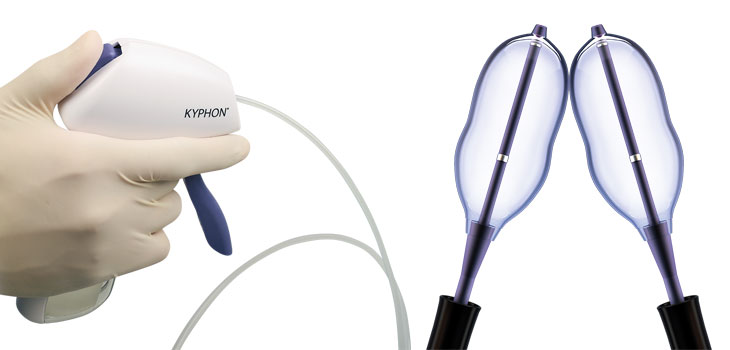
On September 17, 2014, the company announced the launch of the Kyphon Express II Balloon Kyphoplasty Platform for the treatment of vertebral compression fractures (VCF).
The first generation system came to Medtronic in 2007 when the company paid $4.2 billion for the technology. It was not the company’s best acquisition. In 2009, then CEO Bill Hawkins told analysts, “Kyphon, very candidly, has been a bit of a disappointment for us.” He was soon replaced by a new CEO.
There were also questions about the procedure’s effectiveness as clinical results raised doubts whether or not kyphoplasty was any better than vertebroplasty. A study from the Mayo Clinic questioned whether cement intervention for VCF’s was any better than a “sham” surgery using only saline.
Recently however, sales have improved. BMO Capital Market analyst Joanne Wuensch observed in August that Medtronic was now reporting kyphoplasty sales under a new category called “Interventional Spine.” She wrote that kyphoplasty sales were up 4%, including U.S. results boosted by expansion into new markets and stabilizing usage trends. “While the Kyphon result is a nice call-out, we do not want to make too much of the start of a trend, it’s been about five years since the segment delivered positive revenue growth.”
Improved Features
The company says the new “platform features a maximum pressure rating of 700 psi, providing the treating physician a more powerful option for reducing fractures. The new system also gives physicians the option of using the cement resistant technique, which allows one balloon to remain inflated during contralateral cement fill, helping to maintain the goal of fracture reduction. In addition, this system includes an expanded tools portfolio that is more versatile, allowing for the treatment of a variety of different levels of the spine.”
The new system, states the company, “includes new features designed to increase the efficiency and precision of delivering bone cement into a vertebral body. The re-designed cement cartridges can be filled simultaneously with a provided T-adapter, increasing procedure efficiency.” In addition, “the system has longer shelf life for enhanced usability.” “The [system] “continues to allow the physician to deliver highly viscous bone cement to the patient from up to 4 feet away from the radiation source while maintaining tactile feel. It also still includes a Quick Release Button that provides the ability to halt the flow of bone cement on demand, giving the physician precise control over the amount of cement flow, ” continued the company statement.
Doug Beall, M.D., chief of radiology services for Clinical Radiology of Oklahoma, said the Kyphon balloon kyphoplasty technology is a “proven therapy that provides numerous benefits to patients suffering from vertebral compression fractures, including long-term maintenance of height restoration…physicians can now treat more spine levels by choosing the sizes, length and volume most appropriate for the individual patient’s anatomy and fracture.”
Low Complications
While complication rates are low, the company says there are risks associated with the procedure, “some of which may be fatal. These include: heart attack, cardiac arrest, stroke, and embolism. Other complications include infection and leakage of bone cement into the muscle and tissue. Cement leakage into the blood vessels may result in damage to the blood vessels, lungs, heart, and/or brain. Cement leakage into the area surrounding the spinal cord may result in nerve injury that can, in rare instances, cause paralysis.”
Author
React:
Discussion
This is a fascinating development. In my practice we've seen similar outcomes with the revised protocol. The key differentiator seems to be patient selection criteria. Has anyone else noticed the correlation with BMI thresholds?
Great point. I'd push back slightly on the conclusion, the sample size in the cited study is too small to draw population-level inferences. That said, the directional signal is compelling and worth a larger RCT.
We implemented a similar approach last year. Early results are promising but we're still gathering 12-month follow-up data. Happy to share our protocol if anyone is interested.
Join the conversation
Orthopedic professionals are discussing this. Sign in and upgrade to read every comment and add your voice.