
In order to maximize positive clinical outcomes, LDR pursues its surgeon education programs with the utmost planning and care. Their regional and national educational programs, which nearly 1, 000 surgeons have attended in just the last 12 months, are ensuring that the nuances of the company’s key products are clear to surgeons.
LDR On a Roll With Surgeon Training
1 min read Premium comments
Secondary
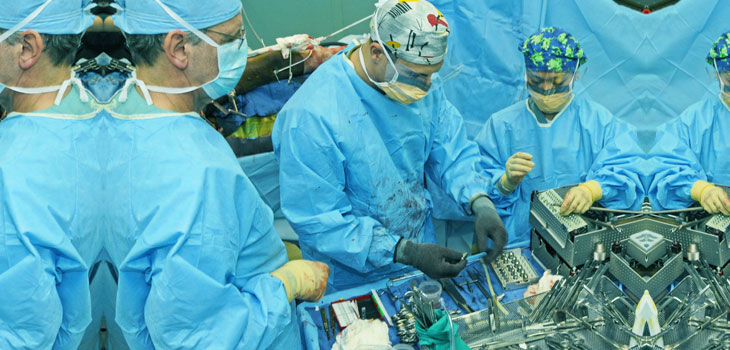
The company offers didactic training, peer-to-peer training, cadaver based training, surgeon visitation programs, and product specific instructional courses. LDR has run training courses in more than 20 states over the past year and periodically sponsors informational sessions concurrent with industry trade shows such as the North American Spine Society.
Regarding LDR’s professional medical education courses, Christophe Lavigne, CEO of LDR, told OTW, “LDR’s most common surgeon training experience is cadaveric based, which is managed by the company’s Professional Medical Education team. These courses include comprehensive didactic content along with a lab session of roughly equal length where attendees can take advantage of a proctor-led cadaveric surgical technique training experience.”
Elaborating on the LDR peer-to-peer programs, he added, “The need and logistics for peer-to-peer training, where one surgeon is trained by an expert user, is confirmed and facilitated by LDR’s Professional Medical Education team. The trainings involve a thorough didactic overview of the product technology, surgical technique, clinical data, on-label indications, etc. This is often followed by a comprehensive hands-on session with the instrumentation.”
And finally, commenting on the surgeon visitation programs, Lavigne mentioned, “Physicians’ requests for training are submitted through an online portal and are then vetted and managed by LDR’s Professional Medical Education team. The team also identifies visitation sites. Selection criteria is based on the site team’s technical experience, interest in and willingness to teach, and availability. A typical visitation includes a surgery observation along with additional meetings to discuss technical details, the surgical technique, indications and contra-indications, and also individual case reviews.”
React:
Discussion
This is a fascinating development. In my practice we've seen similar outcomes with the revised protocol. The key differentiator seems to be patient selection criteria. Has anyone else noticed the correlation with BMI thresholds?
Great point. I'd push back slightly on the conclusion, the sample size in the cited study is too small to draw population-level inferences. That said, the directional signal is compelling and worth a larger RCT.
We implemented a similar approach last year. Early results are promising but we're still gathering 12-month follow-up data. Happy to share our protocol if anyone is interested.
Join the conversation
Orthopedic professionals are discussing this. Sign in and upgrade to read every comment and add your voice.