
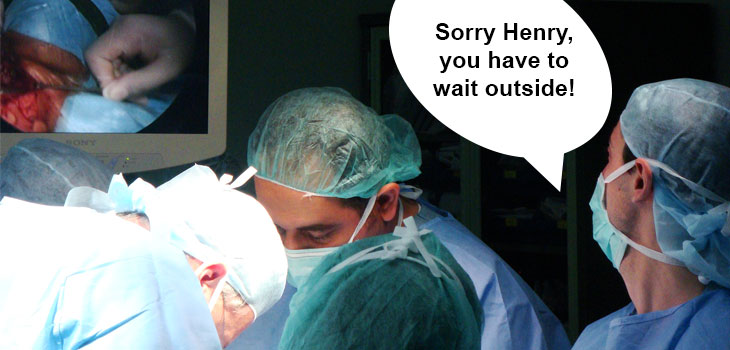
A growing number of hospitals are excusing sales representatives from the operating room and are educating their own employees to provide technical assistance to doctors during surgery, writes Jaimy Lee in Modern Healthcare. Representatives from medical device manufacturers have, in the past, routinely been present in operating rooms to reply to questions about the product the surgeon is implanting.
Hospitals Evict Sales Reps from ORs
1 min read Premium comments
Secondary
Lee reports that by switching to a rep-less model, hospitals are both cutting costs and improving quality. Loma Linda University Medical Center is a case where the hospital claims to have decreased the prices of implants by about 50%. Lee writes that 90% of the approximately 400 hip and knee replacement surgeries performed each year at Loma Linda are done using the rep-less, direct service model.
Loma Linda hospital employs two in-house orthopedic device technicians—trained by the device manufactures—who manage the implant devices from the moment they arrive at the hospital. “Sales reps have created this necessity for themselves with the surgeon, and we’re saying it’s not as necessary as everyone thinks it is, ” says Justin Freed, the executive director of supply chain at Loma Linda University Medical Center.
According to Lee, some small and mid-size device makers and distributors are taking advantage of this trend and are working with the hospitals to develop the rep-less model. As part of their response they are selling their implants at a significant discount.
Not everyone thinks the rep-less model is a good thing. Lee noted that some observers believe that eliminating sales reps in the operating room could affect patient safety if not done properly. Lisa McGiffert, director of the Consumers Union’s Safety Patient Project, said, “If hospitals are not looking at safety and effectiveness as well as cost, then you might have a recipe for disaster.”
Lee makes the point for Modern Healthcare that removing the sales reps from the operating rooms could improve infection control and mitigate legal risks if there is a lack of informed consent when a patient does not know the rep is present in the operating room.
Author
React:
Discussion
This is a fascinating development. In my practice we've seen similar outcomes with the revised protocol. The key differentiator seems to be patient selection criteria. Has anyone else noticed the correlation with BMI thresholds?
Great point. I'd push back slightly on the conclusion, the sample size in the cited study is too small to draw population-level inferences. That said, the directional signal is compelling and worth a larger RCT.
We implemented a similar approach last year. Early results are promising but we're still gathering 12-month follow-up data. Happy to share our protocol if anyone is interested.
Join the conversation
Orthopedic professionals are discussing this. Sign in and upgrade to read every comment and add your voice.