
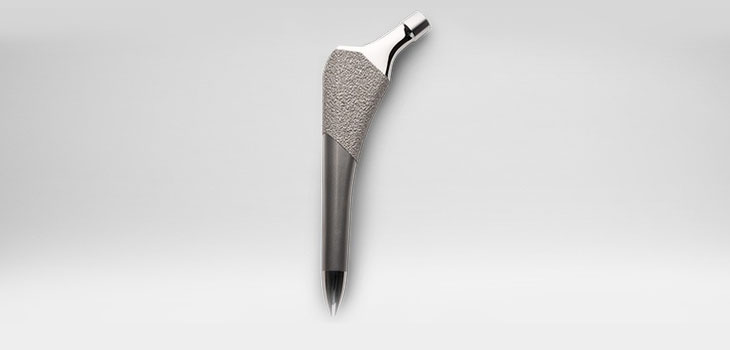
Ortho Development Corporation, of Draper, Utah, has received clearance from the Food and Drug Administration for its Alpine Hip Stem. The Alpine Hip Stem is intended for use in total hip arthroplasty and hemiarthroplasty procedures.
FDA Clears Ortho’s Hip Stem
1 min read Premium comments
Secondary
Company officials say that the firm’s engineers developed the Alpine based on the clinically-proven, conical tapered hip stem philosophy. Design enhancements include the optimization of three critical aspects of the implant—neck length and shape, medial curve geometry and fit, and overall stem length.
Brent Bartholomew, president of Ortho Development, explained, “With Alpine, we have taken a decades-old concept and developed a modern, versatile product that will accommodate multiple surgical approaches to hip replacement. Currently, this type of tapered stem is being used in over 30% of hip replacement procedures, and we expect Alpine will become a major contributor to our future growth.”
Ortho Development Corporation was founded in 1994 and distributes its products in the United States and Japan.
Author
React:
Discussion
This is a fascinating development. In my practice we've seen similar outcomes with the revised protocol. The key differentiator seems to be patient selection criteria. Has anyone else noticed the correlation with BMI thresholds?
Great point. I'd push back slightly on the conclusion, the sample size in the cited study is too small to draw population-level inferences. That said, the directional signal is compelling and worth a larger RCT.
We implemented a similar approach last year. Early results are promising but we're still gathering 12-month follow-up data. Happy to share our protocol if anyone is interested.
Join the conversation
Orthopedic professionals are discussing this. Sign in and upgrade to read every comment and add your voice.