
Medtronic, Inc. has received FDA clearance for a growth guidance system that can avoid having to fuse kids with a severe form of scoliosis.
FDA Cleared System Spares Scoliosis Kids From Fusion
1 min read Premium comments
Secondary
SHILLA Growth Guidance System
Richard McCarthy, M.D., the inventor of the SHILLA Growth Guidance System, said on August 28, 2014: “The current gold standard technique to manage scoliosis long-term is to fuse the spine, but in children who are still growing this can have serious complications. Until now we were only able to offer operations which use implants to stabilize the curve in the spine, but these frequently mean twice-yearly surgeries as a child grows.” He added that the clearance of the system marks the first time surgeons can offer effective management of the curvature of the spine while still harnessing the child’s natural growth.
Non-Locking Screw, Sliding Rod
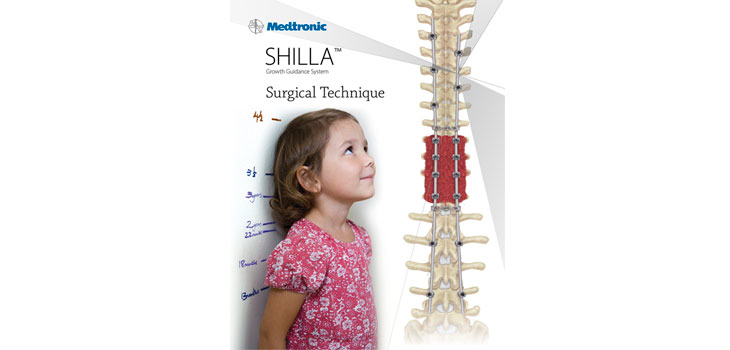
The system does this by utilizing a unique non-locking set screw at the proximal and distal portions of the construct’s rods. This specific feature allows the rod to slide through the screw heads as the child’s spine grows, while still providing correction of the spinal deformity.
According to a company press release, “the system is designed for treatment of skeletally immature pediatric patients less than 10 years of age diagnosed with severe, progressive, life-threatening, early-onset spinal deformities. The system is a new growth-sparing technology that allows correction of the deformity while maintaining the corrections over time, minimizing the need for periodic lengthening procedures. This, says the company, is different than current operative treatments, which are distraction based systems that require lengthening every 6 to 9 months.”
Kids in other parts of the world have been able to receive this device since 2012 when the system received CE Mark in Europe. The system has now been used in 17 countries, on 3 continents.
Author
React:
Discussion
This is a fascinating development. In my practice we've seen similar outcomes with the revised protocol. The key differentiator seems to be patient selection criteria. Has anyone else noticed the correlation with BMI thresholds?
Great point. I'd push back slightly on the conclusion, the sample size in the cited study is too small to draw population-level inferences. That said, the directional signal is compelling and worth a larger RCT.
We implemented a similar approach last year. Early results are promising but we're still gathering 12-month follow-up data. Happy to share our protocol if anyone is interested.
Join the conversation
Orthopedic professionals are discussing this. Sign in and upgrade to read every comment and add your voice.