
MESA Hooks, made by K2M Group Holdings, Inc., have been cleared by the FDA for sale in the U.S.
FDA Clearance and CE Mark for K2M MESA Hooks
1 min read Premium comments
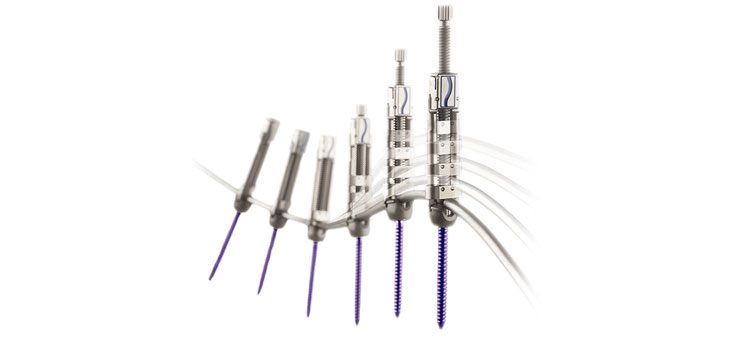
Secondary
The company announced on September 2, 2014 that the hooks are the latest implant addition to the MESA Deformity Spinal System. K2M also received the CE Mark for the hooks.
The MESA Hook extension to the existing spinal system, according to the company, “provides a unique low-profile option to this versatile system. The MESA Deformity System, designed for use in complex spine surgeries, contains a wide range of implants and instruments for the treatment of deformity, trauma and tumor. K2M’s low-profile, top-loading MESA Technology features Zero-Torque Technology, which offers surgeons the ability to one-step lock without torsional stress applied to the spine. The MESA Hooks line extension includes a variety of transverse process hooks, laminar hooks and pedicle hooks.”
Hilali Noordeen, MA, BM BCh (Oxon), FRCS (Eng), MCh Orth., FRCS (Orth), a consultant spinal surgeon at the Royal National Orthopaedic Hospital in the United Kingdom, said, “The MESA Hooks offer surgeons flexibility to complete an entire MESA construct. They allow for the use of Crickets at every level, and they work well with MESA Rail.”
In addition to the hooks, the MESA system is comprised of foundation screws, deformity uniplanar screws, 360° screws, cobalt chrome and titanium rods, and rails. “The revolutionary design of the Reduction Jacks (Crickets), coupled with a complete offering of varied screw and hook types, provide surgeons with the ability to accomplish the most difficult correction maneuvers across all planes utilizing unique instrumentation for slow, controlled correction of the spine, ” said the company statement.
Company President and CEO, Eric Major, said the regulatory milestones are examples of the company’s commitment to innovation.
Author
React:
Discussion
This is a fascinating development. In my practice we've seen similar outcomes with the revised protocol. The key differentiator seems to be patient selection criteria. Has anyone else noticed the correlation with BMI thresholds?
Great point. I'd push back slightly on the conclusion, the sample size in the cited study is too small to draw population-level inferences. That said, the directional signal is compelling and worth a larger RCT.
We implemented a similar approach last year. Early results are promising but we're still gathering 12-month follow-up data. Happy to share our protocol if anyone is interested.
Join the conversation
Orthopedic professionals are discussing this. Sign in and upgrade to read every comment and add your voice.