
According to a new study in a rabbit model, BioStructures, LLC’s Signafuse bioactive bone graft as a standalone implant works better than autograft in posterolateral spine fusion. The study was performed at the Bone Healing Research Lab/Iowa Spine Research Center at the University of Iowa.
Biostructures’ Bone Graft Trumps Autograft for Fusion
2 min read Premium comments
Secondary
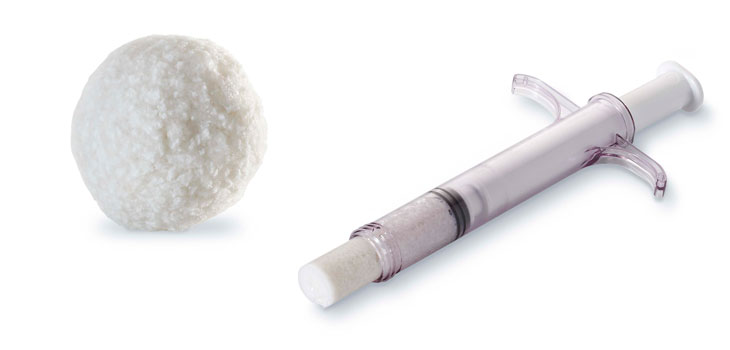
As indicated by the company, Signafuse is a moldable, bioactive bone graft comprised of biphasic mineral and 45S5 bioactive glass suspended in a resorbable polymer matrix. The synergistic combination of biphasic mineral and bioactive glass, addresses the long and short term healing demands of spine fusion procedures. The bioactive glass elicits an immediate “bioactive” response that is supported over time by the gradually resorbing biphasic mineral. The patented polymer matrix allows the surgeon to shape and apply the implant based on each patient’s unique anatomy.
John Brunelle, Ph.D., chief technology officer for BioStructures, told OTW, “Signafuse outperformed the predicate across radiographic, biomechanical and histological endpoints. The higher fusion rate compared to historical autograft was particularly unexpected and unprecedented for a synthetic material in this highly challenging model. The synergistic combination of biphasic and bioactive materials appears to create an environment for more optimal fusion healing than typically seen with either material used alone.”
Russell Cook, BioStructures’ co-founder and CEO, commented to OTW, “The intuitive combination of our proven platform of technologies meets several market needs and provides the surgeon an optimized product for their patients. We’re confident the pre-clinical efficacy will translate into long-term clinical success.”
Dr. Brunelle told OTW, “Signafuse demonstrated advanced bone remodeling and higher spine fusion rates in radiographic, biomechanical and histological analyses. The Signafuse histology consistently revealed fully remodeled bone across the fusion defects, which was not consistently observed in the Actifuse ABX treated animals.”
Cook stated, “We were surprised to learn that the combination of two commercially available bone grafting materials in a single implant, at specific targeted quantities, would produce a dramatically improved bone healing response.”
Asked where they go from here Dr. Brunelle told OTW, “We’ll be conducting further characterization studies to gain a full understanding of the underlying physiological response to the implant materials that led to the improved bone healing. Knowledge of these mechanisms will provide the basis for enhancements in potential second generation technologies. We’ll also be publishing Signafuse studies in related academic journals to increase credibility within the medical and scientific communities. In addition, we plan to begin collecting clinical data to validate the animal study findings.”
Russell Cook noted, “One year from now we hope to have brand name recognition and increased market share, based on our scientific results, surgeon experiences, and patient outcomes.”
React:
Discussion
This is a fascinating development. In my practice we've seen similar outcomes with the revised protocol. The key differentiator seems to be patient selection criteria. Has anyone else noticed the correlation with BMI thresholds?
Great point. I'd push back slightly on the conclusion, the sample size in the cited study is too small to draw population-level inferences. That said, the directional signal is compelling and worth a larger RCT.
We implemented a similar approach last year. Early results are promising but we're still gathering 12-month follow-up data. Happy to share our protocol if anyone is interested.
Join the conversation
Orthopedic professionals are discussing this. Sign in and upgrade to read every comment and add your voice.