
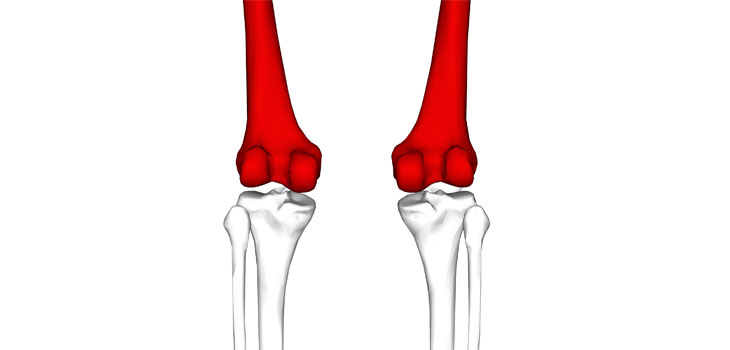
Some U.S. surgeons are offering their patients the option of a custom-made joint implant using 3-D technology. One of those is Vivek Neginhal, M.D., of Scott Orthopedic Center in Huntington, West Virginia., who also serves as director of St. Mary’s Regional Joint Replacement Center. This year he began creating an exact custom implant created through advanced digital imaging technology. This enables him to make a map of the patient’s knee which is reproduced in 3-D resulting in a wax mold of the part. The replacement knee joint is formed from the mold.
3-D Knees Growing in Popularity
1 min read Premium comments
Secondary
Neginhal told Associated Press writer Jean Hardiman that, just as every face is different, every knee is different. When the knee is an exact fit the surgeon does not have to cut away or alter any tissue to place the implant. “It is accurate to less than a millimeter, ” he said.
While the 3-D created joint is somewhat more costly, Neginhal believes it brings a number of advantages to patients, does not increase hospital costs and may result in cost savings because of a shorter period of rehabilitation care.
One of Neginhal’s partners, Felix Cheung, M.D, chief of orthopedic oncology and vice chairman of operations for Marshall Orthopaedics, is also offering the 3-D produced knee. Hardiman quoted him as saying, “That’s a great knee. I’ve been doing it six months now. It’s worked well. It’s attractive in the sense that early data has shown people have faster recovery and their knee feels more normal.”
“Creating an exact match for each patient had been cost prohibitive before 3-D printing, ” Neginhal told Hardiman.
Author
React:
Discussion
This is a fascinating development. In my practice we've seen similar outcomes with the revised protocol. The key differentiator seems to be patient selection criteria. Has anyone else noticed the correlation with BMI thresholds?
Great point. I'd push back slightly on the conclusion, the sample size in the cited study is too small to draw population-level inferences. That said, the directional signal is compelling and worth a larger RCT.
We implemented a similar approach last year. Early results are promising but we're still gathering 12-month follow-up data. Happy to share our protocol if anyone is interested.
Join the conversation
Orthopedic professionals are discussing this. Sign in and upgrade to read every comment and add your voice.