
Professor Alan Boyde and colleagues from Queen Mary University of London have identified a new mechanism of joint destruction that is caused by a material that grinds down healthy cartilage and makes painful osteoarthritis (OA) even worse.
UK Scientists: Metabolic Disease Key to OA?
1 min read Premium comments
Secondary
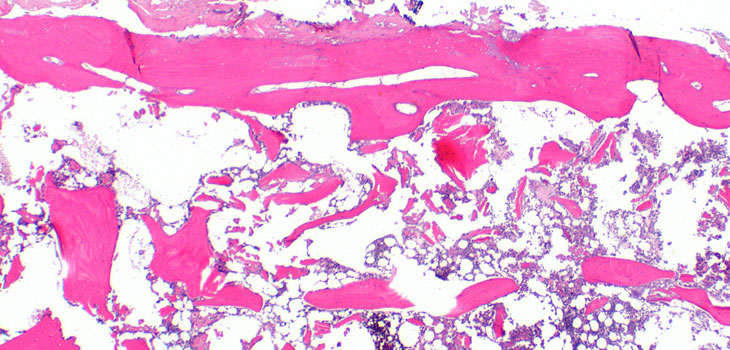
Initially, the team looked at the hip of a man with alkaptonuria (AKU). According to the news release, this is a metabolic disease in which a substance called homogentisic acid accumulates in joint cartilage, causing changes to its physical properties. The researchers found high density mineralized protrusions (HDMP), which had previously only been seen in horses. “These protrusions are caused as the body acts to fill in cracks in joint cartilage and can snap off, leading to sharp, dense particles in the joint which grind against healthy tissue. To confirm the findings, the team studied eight hips donated for research by people with osteoarthritis and found the same results as in the alkaptonuria patient.”
Professor Jim Gallagher led the study in Liverpool. In the August 11, 2014 news release he said, “There is no cure for osteoarthritis, but it is one of the leading causes of disability, causing immense pain and difficulty of movement to sufferers. The discovery of HDMP in humans means that for the first time we are seeing an important mechanism in the process which causes the disease. In effect these small, sharp particles could act like an abrasive powder scouring the surfaces of the joint.”
The authors, whose work was published in the Journal of Anatomy, recommend that searching for these HDMPs should now be included in the study of patients with osteoarthritis.
Author
React:
Discussion
This is a fascinating development. In my practice we've seen similar outcomes with the revised protocol. The key differentiator seems to be patient selection criteria. Has anyone else noticed the correlation with BMI thresholds?
Great point. I'd push back slightly on the conclusion, the sample size in the cited study is too small to draw population-level inferences. That said, the directional signal is compelling and worth a larger RCT.
We implemented a similar approach last year. Early results are promising but we're still gathering 12-month follow-up data. Happy to share our protocol if anyone is interested.
Join the conversation
Orthopedic professionals are discussing this. Sign in and upgrade to read every comment and add your voice.