
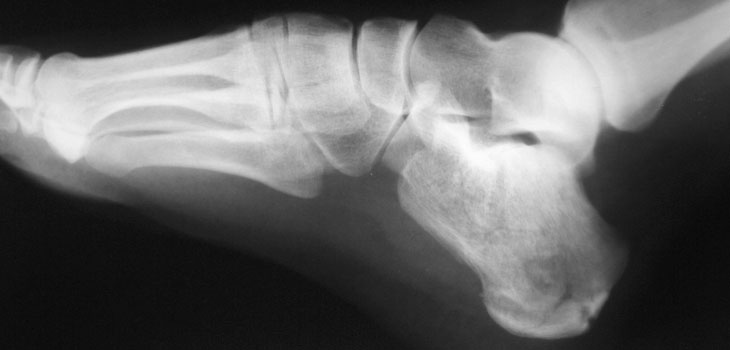
Surgery to mend severe heel fractures is no more effective than non-surgical treatment. That is the word from a trial, one of the largest of its kind ever performed in orthopedic surgery, according to Damian Griffin, M.D., professor of trauma and orthopaedic surgery at Warwick Medical School, United Kingdom. The trial involved 150 patients who had suffered a severe heel fracture and were being treated at 22 hospitals around the UK.
Surgery Ineffective For Heel Fractures
1 min read Premium comments
Secondary
Researchers published their findings in the British Medical Journal and Health Canal reported the story. In an accompanying editorial, Brigitte Scammell, M.D., professor of orthopedic sciences at the University of Nottingham, bluntly wrote, “For most patients, surgery can no longer be justified. Conservative management is safer, but equally ineffective.”
About 2, 000 people in the UK every year experience severe heel injuries usually as a result of road accidents or falling off ladders. Researchers conducted the randomized controlled trial because of a pervasive lack of evidence as to whether surgical reconstruction was more effective than conservative management utilizing elevation of the foot, applying ice, and splinting.
Researchers at Warwick Medical School found that surgery also led to painful and expensive complications. Almost 20% of those who had surgery on their damaged heels developed an infection, and a further 11% required further surgery to remove infected or painful screws.
Participants in both the surgical and non-surgical arms of the study recovered slowly, regardless of which treatment they received. All reached a plateau of improvement at about 18 months. After two years most of the patients were still adversely affected by the injuries to their heels. About 85% returned to work, although most changed to less physically demanding work.
Griffin said, “This study is likely to have a significant impact in the UK and around the world. For a clinical problem that has been beset by uncertainty for half a century, we believe that this study now provides clear evidence to guide practice. Future developments in surgical techniques to treat these fractures should be tested in randomized controlled trials before they are widely used.”
Author
React:
Discussion
This is a fascinating development. In my practice we've seen similar outcomes with the revised protocol. The key differentiator seems to be patient selection criteria. Has anyone else noticed the correlation with BMI thresholds?
Great point. I'd push back slightly on the conclusion, the sample size in the cited study is too small to draw population-level inferences. That said, the directional signal is compelling and worth a larger RCT.
We implemented a similar approach last year. Early results are promising but we're still gathering 12-month follow-up data. Happy to share our protocol if anyone is interested.
Join the conversation
Orthopedic professionals are discussing this. Sign in and upgrade to read every comment and add your voice.